Let's name the thing nobody talks about
You're ready to have sex. Your partner is ready. Everything should be fine. But then your brain does its thing: "Am I wet enough yet? Why isn't this happening faster? Is something wrong with me?" And just like that, arousal slams shut.
This isn't a body problem. It's an anxiety problem living in your body.
Why speed anxiety kills arousal
Your nervous system responds to pressure like it responds to threat. When you're watching the clock on your own arousal, your brain shifts into a kind of performance mode. The part of your brain responsible for pleasure goes quiet. The part that monitors and judges takes over. This is why trying harder makes it worse.
I see this pattern constantly in my work with couples. One partner starts doubting their ability to respond quickly, and suddenly there's this invisible timeline hanging over sex. Five minutes in and they're catastrophizing. "My body's broken," they think. "Something's changed. My partner is going to get frustrated." Anxiety spirals.
The irony: the time you need to spend getting aroused is often longer than the time you think it should take. And that gap between "what should happen" and "what's actually happening" is where anxiety lives.
How lemon vibrators change the game
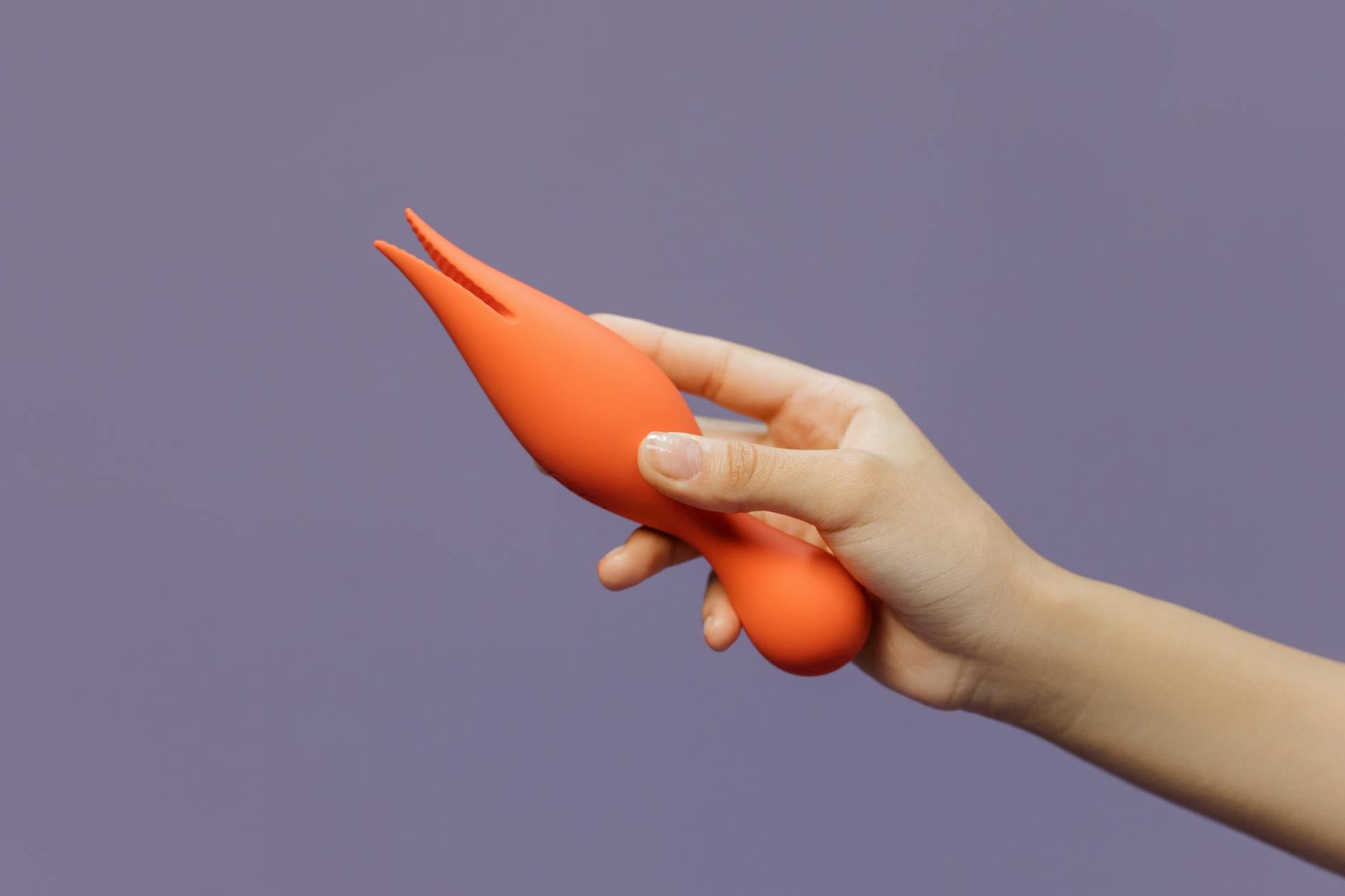
Lemon vibrators, particularly air-suction clitoral vibrators like the Lem, do something your anxious brain needs: they give you something to focus on other than the clock.
Here's what actually shifts when you introduce a lemon vibrator:
1. Attention redirects. Instead of monitoring yourself ("Am I aroused yet?"), you're experiencing sensation. The suction pattern of a lemon clitoral vibrator is so distinct, so different from anything your body has encountered, that your nervous system naturally anchors to it. You can't catastrophize and pay attention to a new sensation at the same time.
2. The timeline disappears. A lemon vibrator doesn't care how long it takes. There's no pressure built into the tool itself. You can use it for two minutes or twenty. Your partner isn't watching the clock because they're watching you experience something. The rhythm belongs to you, not to an imaginary schedule.
3. Pleasure becomes the metric, not speed. When you're using a lemon sucker, arousal isn't about checking boxes (lubrication, physical response, readiness). It's about feeling good right now. That shift in focus rewires how your body responds.
The practical way to use a lemon vibrator when speed anxiety shows up
Two things matter: position and permission.
On position: If you're in bed with a partner and speed anxiety is the issue, start with the vibrator on your own. Solo exploration first removes the performance element entirely. Lie down, get comfortable, and spend 10 minutes with a lemon vibrator just feeling what happens. No goal. No timeline. If arousal builds, great. If it doesn't, that's data too.
Why solo first? Because with a partner present, even if they're being patient, your nervous system is still "on." You're still performing. Solo use rewires your brain to associate the tool with safety and pleasure, not evaluation.
On permission: Tell yourself (and your partner, if you're working together) that this is about presence, not speed. Use language like: "I want to spend some time with this and see what happens" instead of "I'm trying to get aroused." The first is exploratory. The second is goal-oriented. Your nervous system knows the difference.
Building arousal with a lemon clitoral vibrator when anxiety gets in the way
Start at pattern 1 or 2. Most lemon vibrators have multiple suction intensities. When you're anxious, starting low keeps you from overstimulating and then losing sensation. Overstimulation paradoxically kills pleasure when anxiety is present.
Spend 3-5 minutes at each level. Not because there's a rule, but because building arousal slowly when you're anxious teaches your body that there's no rush. Each minute you stay present without checking in on yourself is a small victory for your nervous system.
If your mind wanders to worry ("Is this taking too long?"), that's not failure. It's just your anxious brain doing its job. When you notice it, gently bring attention back to sensation. What does the suction feel like right now? Cool or warm? Focused or broad? These tiny sensory details keep you anchored.
When a partner is involved
If you want to move toward partnered sex with a lemon vibrator in the picture, the timing matters. Build arousal solo first until you feel genuinely turned on and present. Then, when your partner joins, the vibrator stays. This isn't about "needing it to finish." It's about maintaining the sense of safety and focus that lets arousal keep building.
Many people with speed anxiety worry their partner will interpret a vibrator as dissatisfaction. Here's what actually happens: when you're visibly relaxed and present and feeling good, your partner relaxes too. Your calm nervous system is contagious. A lemon vibrator isn't a sign of malfunction. It's a tool that helped you drop the anxiety and show up.
The bigger thing that shifts
Over time, using a lemon vibrator this way rewires your baseline expectations about arousal. You start to trust your body again. You stop catastrophizing at minute three. You realize that your arousal timeline is your arousal timeline, and that's completely fine.
I've worked with people who've carried speed anxiety for years. The moment they stop fighting their own pace and start using tools that help them stay present, everything changes. Arousal stops being a performance metric and becomes a pleasure event.
People also ask
How long should it take to get aroused with a lemon vibrator?
There is no "should." Arousal timing is individual and context-dependent. Some days it takes five minutes. Some days it takes twenty. The goal isn't to hit a specific timeline but to drop the anxiety about having one. A lemon vibrator helps because it's not dependent on speed. It works at whatever pace your body is moving.
Can using a lemon vibrator make speed anxiety worse?
Only if you use it with the same performance pressure you had before. If you're thinking "I need to orgasm in five minutes," the tool won't help. But if you're using it as a way to slow down and stay present, it does the opposite. The suction sensation naturally breaks the anxiety loop.
Will my partner think I'm using a vibrator because of them?
Maybe at first, if this is new territory. The best conversation is straightforward: "I'm working on managing anxiety around arousal, and this tool helps me stay present. It's not about you." People with secure attachment tend to appreciate honesty over mystery. And once they see how relaxed and present you become, most partners understand.
What if I still feel anxious even with the vibrator?
The tool isn't magic. It's a support. If anxiety is severe or persistent, it might be worth talking to a therapist who specializes in sexual anxiety. Sometimes speed anxiety is wrapped up in bigger relationship patterns or past experience. A lemon clitoral vibrator can help in the moment, but deeper work might be needed too.
Is a lemon vibrator better than other vibrators for anxiety?
The suction action of lemon vibrators tends to feel less "performance-based" than traditional vibrators. Because the sensation is so different, your brain gets genuinely interested in what's happening rather than monitoring progress. That's unique to the design. But individual responses vary. What matters is finding a tool that helps you stay present.
How do I know if speed anxiety is the real issue?
Ask yourself: Does arousal feel physically fine when you're alone and relaxed? If yes, it's probably anxiety. If you notice reduced lubrication or difficulty with arousal across all contexts, that might be physical. Most people dealing with speed anxiety notice it shows up most when there's pressure (partner present, time constraint, expectation). Alone, everything works fine.