The guilt trap nobody talks about
Let's be real: many people feel guilty about wanting more pleasure, especially inside a partnership. The story goes something like this. You're with someone you love. You have sex that's fine, maybe even good. But something inside you is asking for more—more intensity, more orgasms, a different kind of stimulation. And suddenly you're telling yourself that wanting that is somehow unfaithful, or demanding, or proof that your partner isn't enough.
That guilt? It's not a moral compass. It's a learned narrative, usually from decades of messaging that female pleasure is either inconvenient or something you should be grateful someone else even tries to provide. When you internalize that story, you start treating your own orgasm like a luxury instead of a basic human experience. And that kills intimacy, not enhances it.
What guilt actually does to the body
Here's the biological part nobody mentions. Shame and arousal live in opposite nervous system states. When you're feeling guilty, your sympathetic nervous system (fight-or-flight) is active. When you're aroused, your parasympathetic system (rest-and-digest) takes over. You literally cannot be both at the same time. So every time you reach toward pleasure and then pull back because of guilt, you're telling your body that sensation isn't safe. That's not protecting your relationship. That's sabotaging your nervous system.
Over time, this creates a specific problem: you start having a harder time coming, or you come less intensely, or you lose desire altogether. And then you blame the relationship when really you're blocking yourself. A lemon vibrator doesn't fix guilt, but it can help you bypass the shame spiral once you understand what's actually happening.
The conversation you need to have (and how to start it)
Before you introduce any tool, you need to talk. Not in the heat of the moment. Not during sex. In a calm conversation where you're both clothed and there's no performance pressure.
Start with something like: "I've realized I've been getting in my own way with pleasure. I think I've internalized a bunch of stuff about wanting more being selfish or unfaithful, and I want to work through that with you because it's affecting me."
That opens the door without making it about your partner's inadequacy. It's about your own blocks. Then you can say: "I want to explore some things that help me come more easily. Would you be open to that being something we do together?"
The magic is in "together." It shifts the frame from "I'm getting a vibrator because you're not enough" to "I'm inviting you into a part of my pleasure."
Why a lemon vibrator changes this dynamic
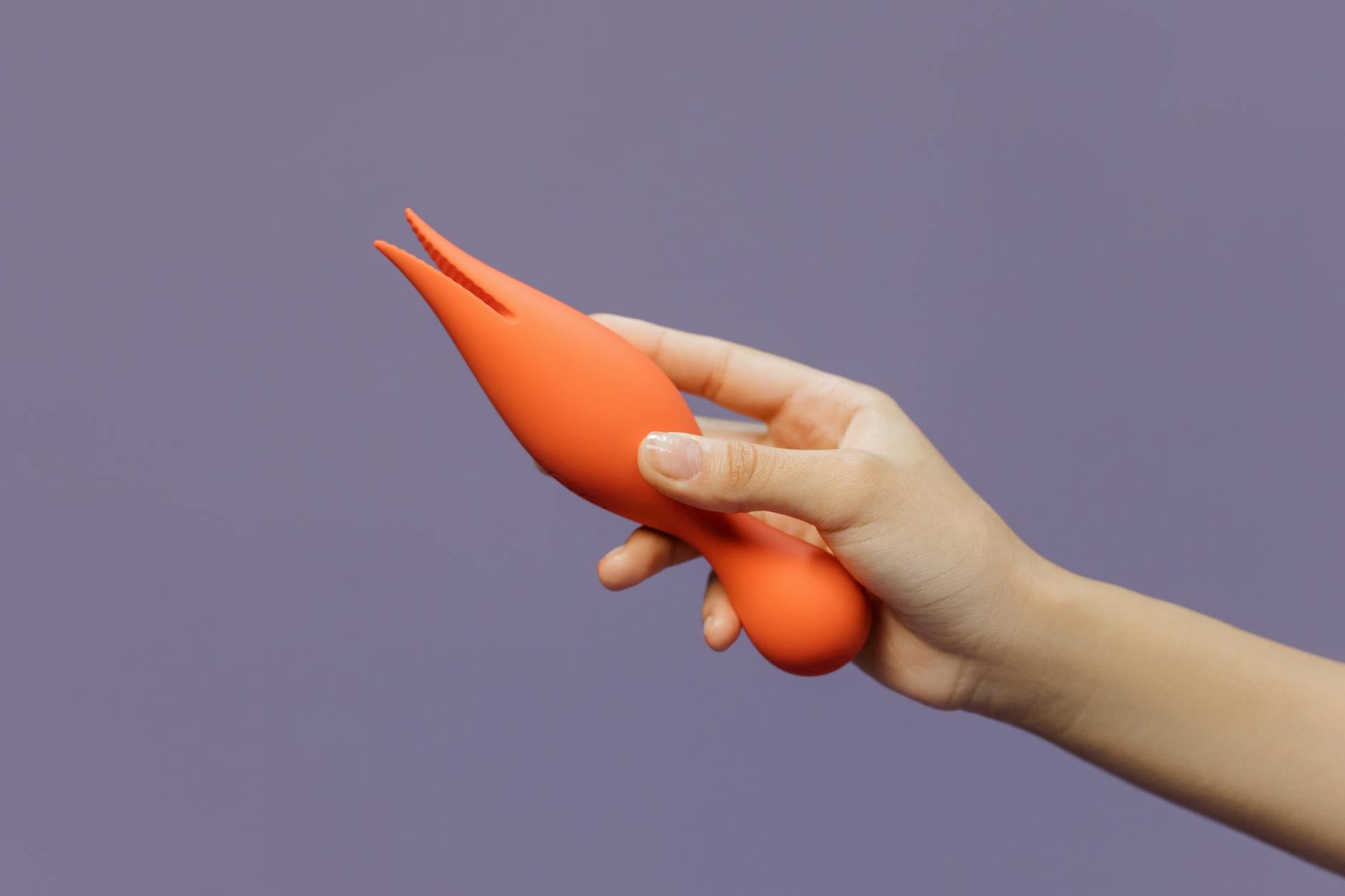
A lemon clitoral vibrator works differently from a traditional vibrator. Instead of constant vibration, it uses gentle suction and air-pulse technology. This matters for guilt because it feels less mechanical and more like physical touch. When you're using it with a partner present, it doesn't feel like you're replacing them. It feels like an extension of what you're already doing together.
Many couples find that once they introduce a lemon vibrator, the dynamic shifts. Instead of "you do this and I'll do that," you're problem-solving together. Your partner might hold it. You might use it while they're inside you (yes, this works). You might use it while you're kissing. The specifics matter less than the fact that it's collaborative.
If guilt is whispering that using a toy means your partner has failed, the shared experience directly contradicts that story. Because they're literally right there, choosing to be part of it.
The reframe that actually works
Instead of "I need this because you're not enough," the truth is: "My body needs different kinds of stimulation, and you loving me means you want to help me access that."
That's not selfish. That's partnership. That's saying "I trust you enough to show you all of me, including the parts that need specific things to function well."
When you can make that shift in your own mind, everything changes. You're not sneaking pleasure. You're not compensating. You're integrating. And your partner gets to feel like an active participant in your satisfaction instead of a bystander or a problem to be solved around.
How to actually use it together (without awkwardness)
Start slow. You don't need a big production. Maybe you're already in bed together and you're fooling around. One of you says, "Want to try something?" You have the toy nearby (not hidden, not shameful). You show your partner what it does on your own hand first. Let them feel the sensation. Remove the mystery.
Then you use it. Your partner can watch, touch you elsewhere, be inside you, whatever feels right in the moment. The first time might feel weird. That's okay. The second time usually feels normal. By the third time, it's just part of your repertoire.
One tip: don't use it as a substitute for what you already do together. Use it in addition to, not instead of. This keeps the guilt narrative from sneaking back in ("I'm choosing the toy over them"). You're expanding, not replacing.
What to do if your partner resists
If they say no, or they say "I don't want that in our sex," that's worth listening to. But it's also worth asking why. Sometimes partners resist because they feel insecure. Sometimes they've internalized the same guilt narrative you have ("my partner wanting a vibrator means I've failed"). And sometimes it's just different comfort levels, which is fair.
If it's insecurity, the conversation is: "This isn't about you. It's about my nervous system and what helps me feel good. And I'd rather explore that with you than alone." You're inviting them into something vulnerable. That actually deepens trust over time, if they're willing.
If it's a hard boundary, you get to decide what that means for you. Some people need this for their own well-being. Some people can table it. That's a relationship decision, not a shame decision.
The guilt you might feel anyway (and that's okay)
Even after you've had the conversation and your partner's on board, you might still feel a twinge when you first use a lemon vibrator together. That's the guilt script running one last time. It doesn't mean anything is wrong. It means you're rewiring a belief that's been there for years.
Notice it. Don't fight it. Let it pass. Keep going. The more you practice pleasure without shame, the quieter that voice gets.
Why this matters more than just sex
When you can own your pleasure in a partnership, you're modeling something important. You're saying that your body's needs matter. That vulnerability is strength. That trust means showing each other all the parts, not just the polished ones. That's relationship health. That's emotional intimacy. That's what makes long-term partnerships work.
A lemon vibrator is a tool. But the real work is untangling the guilt that's been keeping you small. Once you do that, the tool becomes an invitation. And that invitation can transform how you experience both pleasure and partnership.
People also ask
What if I use a lemon clitoral vibrator alone and feel guilty about that?
Guilt about solo pleasure is a separate beast and often runs even deeper. The short answer: you deserve pleasure on your own terms, no audience required. If you have a partner, self-pleasure isn't cheating. It's maintenance. It's learning your own body so you can communicate better to a partner. If guilt is stopping you from touching yourself, that's worth exploring with a therapist, because it usually traces back to messaging you got very young about your body not being yours.
Does using a lemon vibrator with a partner mean we have a bad sex life?
No. In fact, it often means the opposite. Couples who can talk about what they need and bring tools into the bedroom are usually couples who are more sexually satisfied overall. The willingness to expand and experiment is a sign of openness, not deficiency.
How do I know if the guilt I feel is actually useful feedback?
Useful guilt says: "I did something that violated my values." Useless guilt says: "I want something that scares me, so it must be wrong." The difference is in what you'd do about it. If guilt is warning you away from something you actually want, it's not useful. It's just internalized judgment.
Can we use a lemon adult toy if we're in a long-distance relationship?
Yes. Some long-distance couples use a lemon vibrator while they're on a video call together, which creates a different kind of intimacy. Others use it when they're together in person. The distance doesn't change the guilt dynamic—if anything, it can make it worse because you're already separated. This is actually a reason some couples find toys helpful: they're a way of being present together even when bodies aren't in the same room.
What if I feel guilty because I come easier with the lemon vibrator than without it?
That's your body being honest. Some people's nervous systems need specific kinds of stimulation to reach orgasm. That's not a flaw. That's biology. And if you need a lemon clitoral vibrator to come, and your partner loves you, they get to be glad you found something that works. It doesn't diminish them. It sets you free. And freed partners are usually better partners.
How long does it usually take to stop feeling guilty about pleasure with a partner?
It depends on how deep the guilt runs. Some people shift after one conversation and one good experience. Others need a few weeks or months of consistent practice before the old narrative loses its grip. The key is not beating yourself up about the guilt itself. You're rewriting decades of programming. That takes patience.
The bottom line
Guilt is a liar that tells you pleasure is selfish. It tells you wanting more is ungrateful. It tells you that your body's needs are an inconvenience to the person you love. None of that is true. Real partnership means your partner wants you to feel good. It means they want to know you, all of you, including the parts that need specific things.
A lemon vibrator is just a tool. But using one with someone you trust is an act of intimacy. It's saying: "I trust you with my body. I trust you with my pleasure. I trust you enough to ask for what I need." That's not guilt territory. That's love territory. And you belong there.
If you're still wrestling with these feelings and want to talk through them, reach out. We can work through the blocks together.