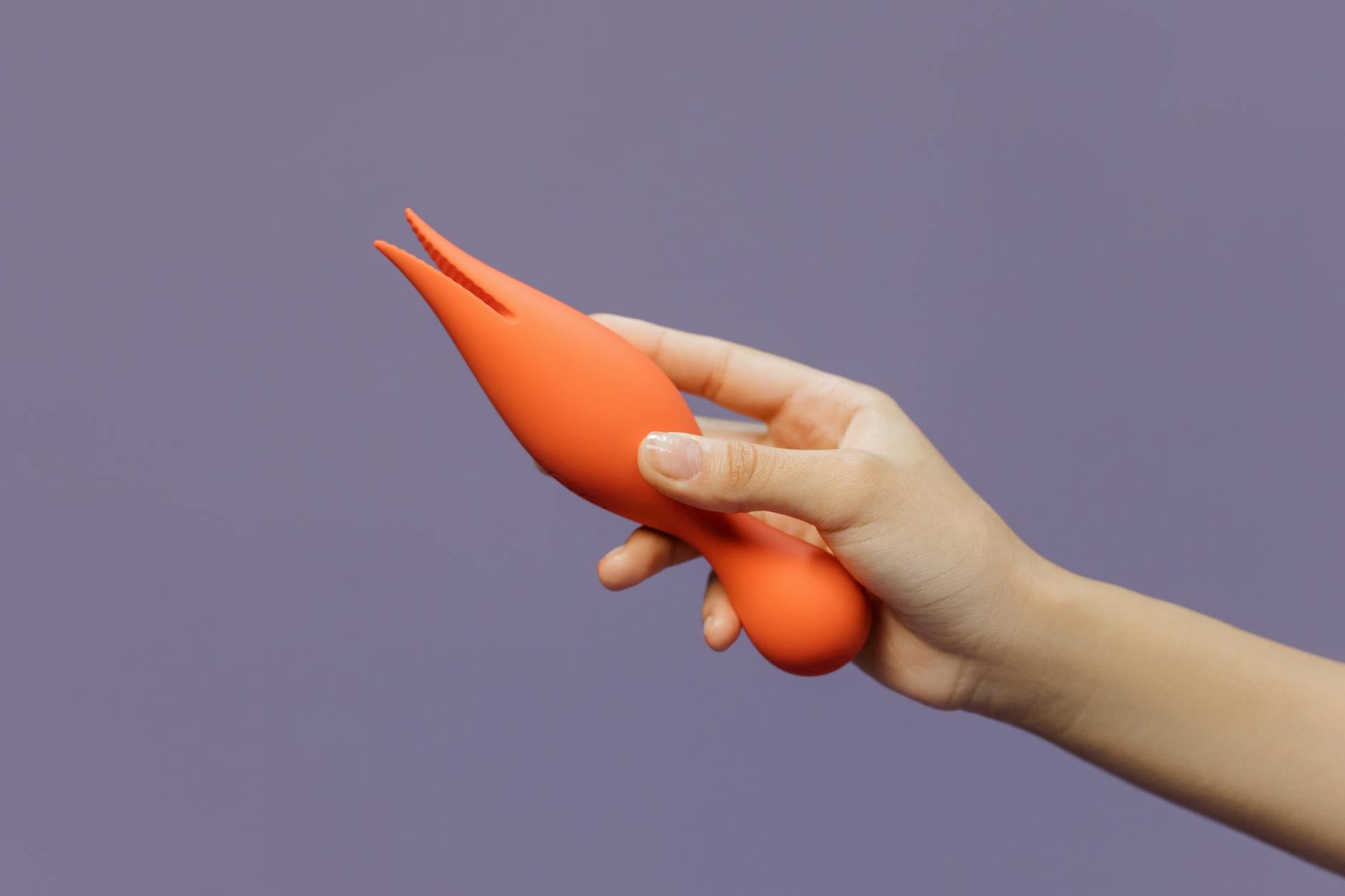
Let's talk about what reduced sensation actually feels like
Reduced clitoral sensitivity is wildly more common than most people realize. Antidepressants, birth control, hormonal shifts, aging, pelvic floor tension, and even stress can mute the signals your body sends during arousal. You're not broken. Your nervous system is just turning down the volume.
Here's the frustrating part: traditional vibrators often make this worse. They rely on rapid-fire mechanical vibration, which can numb tissue further with sustained use. If your clitoris already feels numb or distant, hammering it with standard vibration is like trying to hear someone whispering in a loud room. You need a different tool.
Why lemon vibrators work differently for reduced sensation
Lemon clitoral vibrators use air-suction technology instead of direct vibration. Instead of pressing and buzzing against tissue, they create gentle rhythmic suction that stimulates the entire clitoral complex (including internal branches that most external vibrators miss). This distinction matters enormously when sensation is already compromised.
Air-suction doesn't numb tissue. It wakes it up. The sensation is fundamentally different from vibration. It's broader, less jarring, and because it's working with suction rather than percussion, you can use it longer without the numbness that follows intense vibration.
For people taking SSRIs, antipsychotics, or other medications that reduce sensation, a lemon vibrator often produces orgasms that felt impossible with traditional vibrators. This isn't a miracle. It's just physics applied to anatomy.
Starting with the right expectations about rebuilding sensation
If you've been numb for months or years, your first session with a lemon vibrator won't magically return full sensation. Think of this more like physical therapy than a quick fix.
Your clitoris is incredibly adaptable. Repeated suction stimulation, over days and weeks, literally increases blood flow to the tissue and makes the nerve endings more responsive. People often report that by week two or three of regular use, sensation that seemed gone completely starts returning. By week six, many feel a baseline shift in their responsiveness overall.
That timeline varies wildly. Some people notice change in three days. Others need eight weeks. Patience here isn't weakness. It's how you retrain your nervous system.
The practical setup for reduced sensation
Start in a quiet space where you won't be interrupted. Reduced sensation often means you need your brain's full attention to register pleasure. Distractions aren't just annoying. They actively interfere with what little signal your nervous system can send.
Set aside 20-30 minutes. This isn't rushed. You're not trying to reach orgasm in ten minutes. You're exploring what different sensations feel like across the range of a lemon vibrator's settings.
Use water-based lubricant, even though air-suction technology doesn't technically require it. Lubrication reduces friction against the tissue, which means the suction can work more effectively. A small amount on the tip is enough. Too much and the seal breaks.
Finding the right pattern and intensity for your clitoris
Start at pattern one or two on low. This is not where you'll stay. Most people with reduced sensation eventually use mid-range or higher patterns. But starting low lets you feel the difference between patterns without overwhelming your already-quiet nervous system.
Move the lemon vibrator gently across the clitoral hood and external clitoris rather than holding it in one spot. This explores the full sensory map. Different areas often have different sensitivity. You might find that the side of your clitoris responds more readily than the tip, or vice versa. These discoveries matter.
Build intensity slowly across the first 10-15 minutes. You're not chasing orgasm yet. You're waking up tissue. Move through patterns, vary your angle, notice what creates even the smallest shift in sensation.
When you do feel response starting (tingling, warmth, a gentle pull), hold that pattern and angle for several minutes. This is when the real work happens. Sustained stimulation at the level that's working teaches your nervous system to stay engaged.
Common obstacles when rebuilding sensation
Your brain might feel impatient. After months without good sensation, there's pressure to force an orgasm once you feel anything at all. Resist this. One of the biggest mistakes people make is ramping intensity too fast because they're relieved to feel something. This often triggers the numbness response again, which feels like punishment for progress.
Instead, when you feel sensation building, stay at that level for several minutes before increasing. Your nervous system needs time to trust that pleasure is coming. It sounds metaphorical but it's literally neurological. You're rebuilding a pathway that's been quiet for a while.
If you feel no response after 15-20 minutes, stop. This isn't failure. Your body might need a different time of day, or different hormonal timing in your cycle, or simply more sessions before anything registers. Forcing it creates tension in the pelvic floor, which then reduces sensation further. It's a cycle you want to break, not reinforce.
When medication is part of the picture
If your reduced sensation is a side effect of an antidepressant, antipsychotic, or other psychiatric medication, talk to your prescriber about timing. Some medications have different peak effect times throughout the day. Starting a session 3-4 hours after you take your medication (rather than right after) sometimes means better sensation.
Don't change your medication schedule to improve pleasure without medical guidance. But knowing your medication's timing curve means you can work around it strategically. A lemon vibrator used at the right time of day often makes the difference between impossible and very possible.
Building a sustainable practice
People with reduced sensation often find that consistent use (3-4 times weekly) maintains and improves their responsiveness far better than occasional intense sessions. This is the opposite of chasing an orgasm. It's about maintaining your nervous system's capacity for pleasure.
Think of it like the difference between training for a sport (frequent, moderate practice) versus trying to run a marathon after months of inactivity (occasional, all-out effort). Your clitoris responds better to the first approach.
Many people I work with find that regular use with a lemon vibrator doesn't just restore sensation during that time. It often improves baseline responsiveness across their entire sexual life, including with partners. Suction stimulation teaches your body that pleasure is possible again, which shifts your entire nervous system's default.
The partner conversation when rebuilding sensation
If you're in a relationship and your reduced sensation has affected your shared pleasure, using a lemon vibrator isn't something you need to hide or apologize for. It's a tool that benefits both of you.
You might frame it this way: "My sensitivity has shifted, and I found a technique that works better for my body right now. I want to include you in this if you're interested, but I also might need some solo sessions to reconnect with my own pleasure first."
That second part matters. Rebuilding sensation sometimes works better alone, without performance pressure. Once you've reestablished your own responsiveness, bringing a partner in often feels natural and easier.
When to seek additional support
If reduced clitoral sensation is paired with pain, numbness in other areas, or changes in bowel or bladder function, see a pelvic floor physical therapist. These might indicate pelvic floor dysfunction or nerve involvement that a lemon vibrator can support, but not replace, medical evaluation.
If medication is definitely the cause of your reduced sensation, talk to your prescriber about alternatives. Sometimes switching within the same drug class restores sensation without sacrificing mental health benefits. Sometimes it's worth accepting reduced sensation as a trade-off for medication that works. That's a real conversation worth having directly.
Reduced sensation doesn't mean your pleasure has disappeared forever. It means you need to meet your clitoris where it actually is, not where it used to be. A lemon vibrator often makes that possible in ways that feel less frustrating and more hopeful than anything else out there.
FAQ: Rebuilding Clitoral Sensation With Lemon Vibrators
How long before I feel a real difference in sensation with a lemon vibrator?
Some people notice change within the first three sessions. Others need two to three weeks of regular use before sensation shifts noticeably. The timeline depends on how long you've been numb, whether medication is involved, your stress level, and your pelvic floor tension. Consistency matters far more than intensity. If you use a lemon vibrator once every two weeks, you probably won't see much change. If you use it 3-4 times weekly, most people report a shift within six weeks.
Should I use my lemon vibrator even when I don't orgasm?
Yes, absolutely. In fact, when rebuilding sensation, orgasm is not the goal. Sensation is the goal. Orgasm is a bonus that often comes later. Many people find that focusing on "did I feel that?" instead of "did I come?" actually leads to better outcomes overall. The pressure to orgasm often creates tension that reduces sensation further. Remove that pressure and your body relaxes into the work.
Can I use a lemon vibrator alongside my medication, or does it interfere?
A lemon vibrator won't interfere with any medication. It's a physical tool, not a substance. That said, the medication itself might mean you need more patience or different timing. SSRIs and antipsychotics don't prevent sensation restoration. They just mean the process might take longer or work better at certain times of day. Talk to your prescriber about your medication's timing, and plan your sessions accordingly.
Is it normal to feel numb even with the lemon vibrator at first?
Completely normal. If sensation is very reduced, you might not feel the lemon vibrator strongly at first either. This doesn't mean it's not working. The suction is still increasing blood flow and stimulating nerve endings even if you can't perceive it yet. This is one reason people with severe numbness sometimes benefit from starting with just 5-10 minutes of low-pattern suction, building tolerance and sensation gradually rather than trying for long sessions immediately.
What if my reduced sensation is from a relationship issue, not a physical one?
If your numbness is emotional (disconnection from your partner, unresolved conflict, resentment), a lemon vibrator will help you reconnect with solo pleasure, but it won't resolve the relationship issue itself. Solo sessions with a lemon vibrator can help you remember that your pleasure exists independent of your partnership. That's actually powerful, but don't expect it to fix communication problems or intimacy rifts on its own. That work requires talking to your partner or a couples therapist. The lemon vibrator is a tool for rebuilding your own sensation, not for repairing a relationship.
Can I use a lemon vibrator if I have a very sensitive clitoris?
Sensitivity and numbness are different things. If your clitoris is hypersensitive (pain with touch, overactive nerve responses), a lemon vibrator's gentler, broader suction is actually often more tolerable than direct vibration or manual stimulation. The suction distributes stimulation across a larger area rather than concentrating it in one spot. Start at the lowest pattern and explore angle changes rather than intensity changes. Many people with hypersensitivity find air-suction tools far more comfortable than they expected.
What comes next
Rebuilding clitoral sensation takes patience, but it's not an impossible project. It's something your body is fundamentally capable of. A lemon vibrator is one tool that often makes that rebuilding faster and less frustrating than other approaches.
If you're starting this process or hitting obstacles, reach out. I'm here to help you figure out what's actually working for your body, not what's supposed to work in theory. Your pleasure matters, and you deserve tools and strategies that actually fit your specific situation.
Ready to explore what might work for you? Get in touch at /contact and we can talk through what you're experiencing.