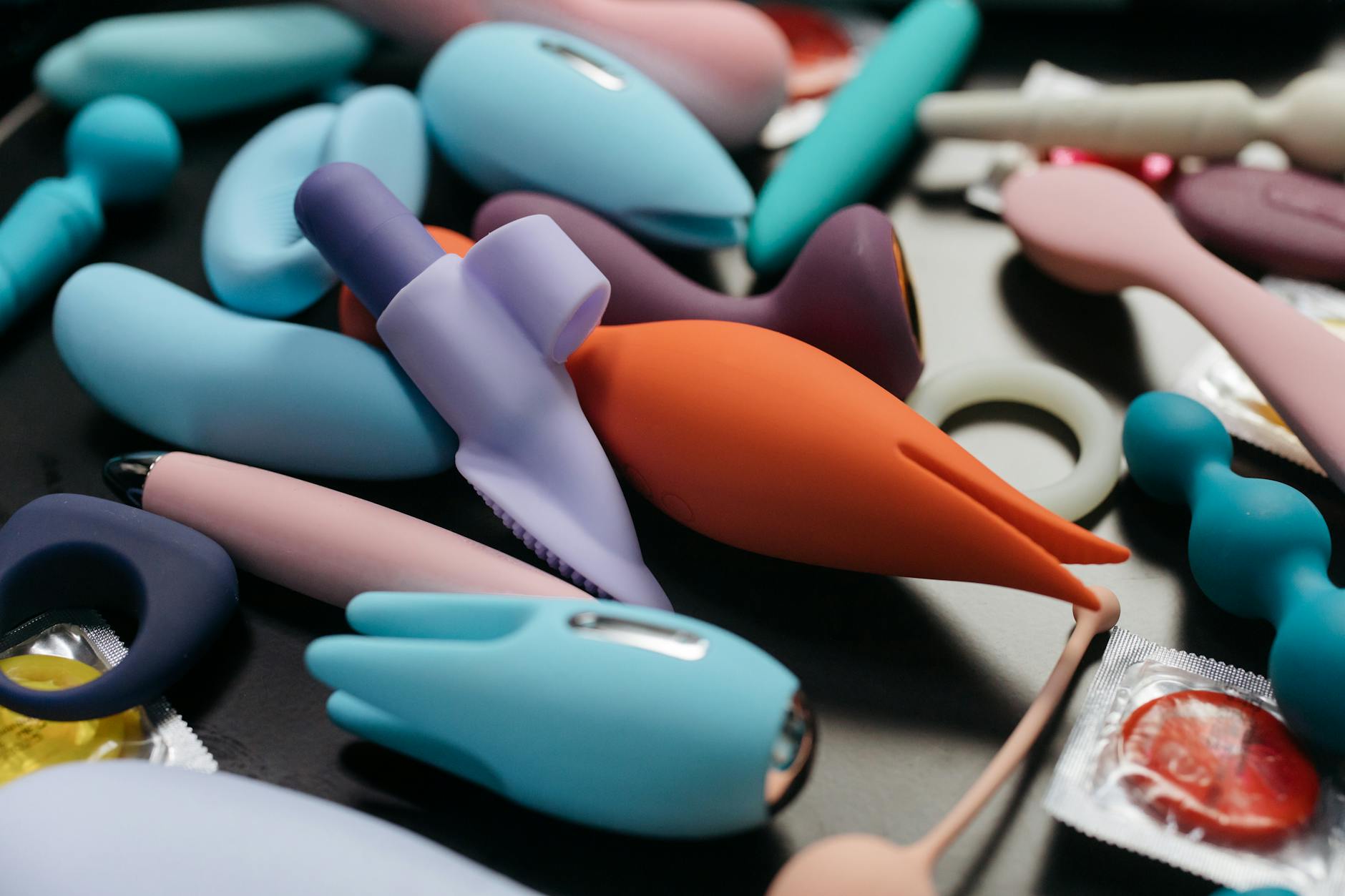
How to Use Lemon Vibrators When You Feel Pressure to Orgasm With a Partner
Orgasm shouldn't be a performance metric. Here's how to reclaim your pleasure when expectations feel heavy, and what lemon sexual toys can actually do about it.
You're with your partner, things are moving along, and somewhere in your head a timer starts. Will it happen? Should it have happened by now? Are they waiting? The pleasure that was there a minute ago suddenly feels like a test you might fail. This is what pressure does. It kills everything.
Here's what I see in my practice over and over: people with vulvas carry an invisible score card into the bedroom. Their partner seems fine, or neutral, or even enthusiastic. But somewhere we learned that our orgasm is a reflection of how attracted our partner is to us, how well they're doing, whether we're "normal." Orgasm became a performance metric instead of a feeling.
Then everything gets harder. Because it's true. Pressure kills arousal. And when you introduce a lemon vibrator (or any clitoral vibrator) into that dynamic without naming the pressure first, you're just adding a faster tool to a broken system.
There's a reason therapists call this the "performance paradox." When your brain is monitoring whether you're orgasming instead of experiencing the sensations that make you orgasm, your nervous system isn't in the parasympathetic state pleasure requires. You're in fight-or-flight. Your body isn't broken. Your context is.
Studies on couples' pleasure show that orgasm frequency actually decreases when partners make it a goal. It increases when partners focus on sensation and connection instead. The second you add a measurement, you've added anxiety.
Lemon clitoral vibrators are incredible tools. They can deliver consistent stimulation that cuts through a lot of static. But they can't cut through shame or the feeling that you're holding your partner's self-esteem in your vagina. That part has to happen in conversation first.
Here's what I recommend: talk about it when you're not in bed, not undressing, not in motion. Saturday morning over coffee. You say something like, "I've noticed that sometimes when we're together, I get in my head about whether I'll orgasm. And I think that's actually making it less likely. I want to try shifting how we think about this."
Then listen to what your partner says. Often they'll say, "I didn't realize you felt that pressure" or "I was worried I wasn't doing something right." Sometimes they'll say, "I really want you to feel good." All of those are worth unpacking.
The goal of this conversation is simple: separate orgasm from success. You can have great sex without it. Your partner can be attractive and skilled even if your body doesn't respond tonight. Pleasure and orgasm are not the same thing.
A lemon sucker like the one we make at Hal Loanancyslem works differently than a traditional vibrator. It uses air-pulse stimulation instead of buzzing friction. For a lot of people, especially those with performance pressure, this feels less clinical. It's gentler. It doesn't require you to coordinate or position yourself in a way that feels like work.
When you introduce a lemon clitoral vibrator into partnered pleasure while you're already feeling watched, the tool can actually help you redirect attention. Instead of "Am I going to orgasm for them," it becomes "What does this actually feel like?" The sensation becomes the focus, not the outcome.
But here's the key: your partner has to understand what they're not supposed to do. They're not supposed to wait for you to finish. They're not supposed to watch intently. They're not supposed to check in constantly. They should integrate into what's happening, not become a spectator.
Start by using it solo first. Spend two or three sessions with your lemon vibrator alone, with no agenda. No timer. No partner. Just learning what feels good, what patterns you prefer, how long you want to spend in different modes. This reclaims your pleasure as belonging to you, not as a couple project.
Then, when you use it together, your partner can help in ways that don't involve watching. They can touch you elsewhere. Neck, breasts, inner thighs. They can be present without being focused on the outcome. Some partners like to be inside you while you use a lemon clitoral vibrator, which shifts the experience entirely. Instead of "waiting," they're participating in a different way.
The clitoral vibrators in the Hal Loanancyslem line are designed to work this way. Small enough that your partner can still move, connect, hold you. Not so big that it feels clinical or requires a lot of space.
Sometimes one conversation and one toy aren't enough. Sometimes the pressure comes from deeper places. From past partners who made you feel like your body was a problem. From cultural messages about what "real" sex should look like. From your own perfectionism.
If that's you, a good sex therapist or couples therapist is worth the investment. I'm not saying that to sell a service. I'm saying it because I've watched people unlock pleasure that felt impossible once they had professional support naming where the pressure came from.
A lemon vibrator is a great tool. But it's not a therapist. And you deserve both.
Here's what I want to say directly: your orgasm is not a gift you give your partner. It's not proof that you love them. It's not a meter of the quality of your relationship. It's a physiological response that happens or doesn't based on about a thousand factors, many of which you can't control.
You can have pleasure without orgasm. You can have orgasm that's subtle instead of dramatic. You can have nights where nothing happens and still have connected, good sex. Your partner can be wonderful and still not trigger you every time.
If you've been carrying the weight of performing pleasure, a lemon clitoral vibrator can help you reclaim sensation. But the real shift happens when you stop measuring and start feeling. The tool just makes that easier.
That conversation, though. That one you have to do first.
Not if you frame it right. In my practice, I tell couples to think of it like this: a vibrator isn't a criticism of your partner. It's a different kind of stimulation, like the difference between kissing and oral sex. It's an addition, not a replacement. When a partner understands that the vibrator is helping you access pleasure more easily, most are relieved, not threatened. The conversation before using it together is everything.
That's extremely common and doesn't mean anything is wrong with your relationship or your body. It means clitoral stimulation from a lemon vibrator works differently than partnered touch. Some people need that specific kind of input to reach orgasm. Others need it sometimes and not others. This is normal variation, not failure. The question to ask yourself is: am I enjoying myself? If yes, you're doing it right.
Both. Use it solo to learn what you like without pressure. Then use it during partnered sex if you both want to. There's no "should" here. Some couples integrate toys into every encounter. Others use them separately. Some use them occasionally. All of those are fine. The only wrong approach is the one where you feel like you're performing instead of enjoying.
Direct and matter-of-fact works best. "I've been thinking about trying a lemon clitoral vibrator because I want to explore what feels good for me. I'd love to use it with you, but I wanted to ask first if you're comfortable with that." Many partners will say yes immediately. Some will need to process. Both are okay. If your partner is firmly against it, that's a separate conversation about why, and it might point to beliefs about sex that are worth exploring together.
It can help with sensation, yes. The air-pulse technology in lemon sexual toys works for a lot of people who don't respond to traditional vibration. But if you're struggling with orgasm across contexts, including alone, it's worth checking in with a doctor. Sometimes it's physiological. Sometimes it's hormonal. Sometimes it's psychological. Often it's a mix. A vibrator is a tool, but it's not a fix for underlying health concerns.
That's legitimate and common. Start by building your own relationship with the vibrator in private. Use it solo until it feels normal, not scary or clinical. Then bring it into partnered pleasure. You might not be ready immediately, and that's fine. The pressure you already feel doesn't need a tool amplifying it. Work on the pressure first, the toy second.
I've watched hundreds of people shift their experience with pleasure in partnerships. The ones who get the best results aren't the ones who buy the fanciest toys. They're the ones who start with honest conversation. Who name the pressure. Who agree that their goal isn't orgasm, it's connection and sensation.
A lemon clitoral vibrator can be part of that. But it's not the solution to the pressure itself. The solution is deciding that your pleasure matters enough to talk about it, and that your partner deserves to know what you're actually feeling instead of carrying invisible expectations.