Here's the thing about partnership and solo pleasure
Having a partner does not mean you owe him, her, or them access to every orgasm your body produces. That's not withholding. That's boundaries. And yet so many people feel guilty about wanting time alone with their lemon clitoral vibrator, as if independent pleasure somehow dishonors the relationship.
It doesn't. In fact, the opposite is true.
Why people feel weird about this (and why they shouldn't)
Most of us grew up with a storyline that went something like this: sex happens between partners. Solo play is a phase, a backup plan, something you do before the "real thing" arrives. When you're in a committed relationship, the narrative suggests, you've graduated past it.
But neuroscience and decades of couples therapy say something different. Solo pleasure using your lemon vibrator serves a completely different neural and emotional function than partnered sex. One is about knowing your own body. The other is about connection. They're not in competition. They're not even on the same track.
When you use a lemon sucker vibrator alone, you're learning. When you're with a partner, you're negotiating. Both matter. Neither cancels out the other.

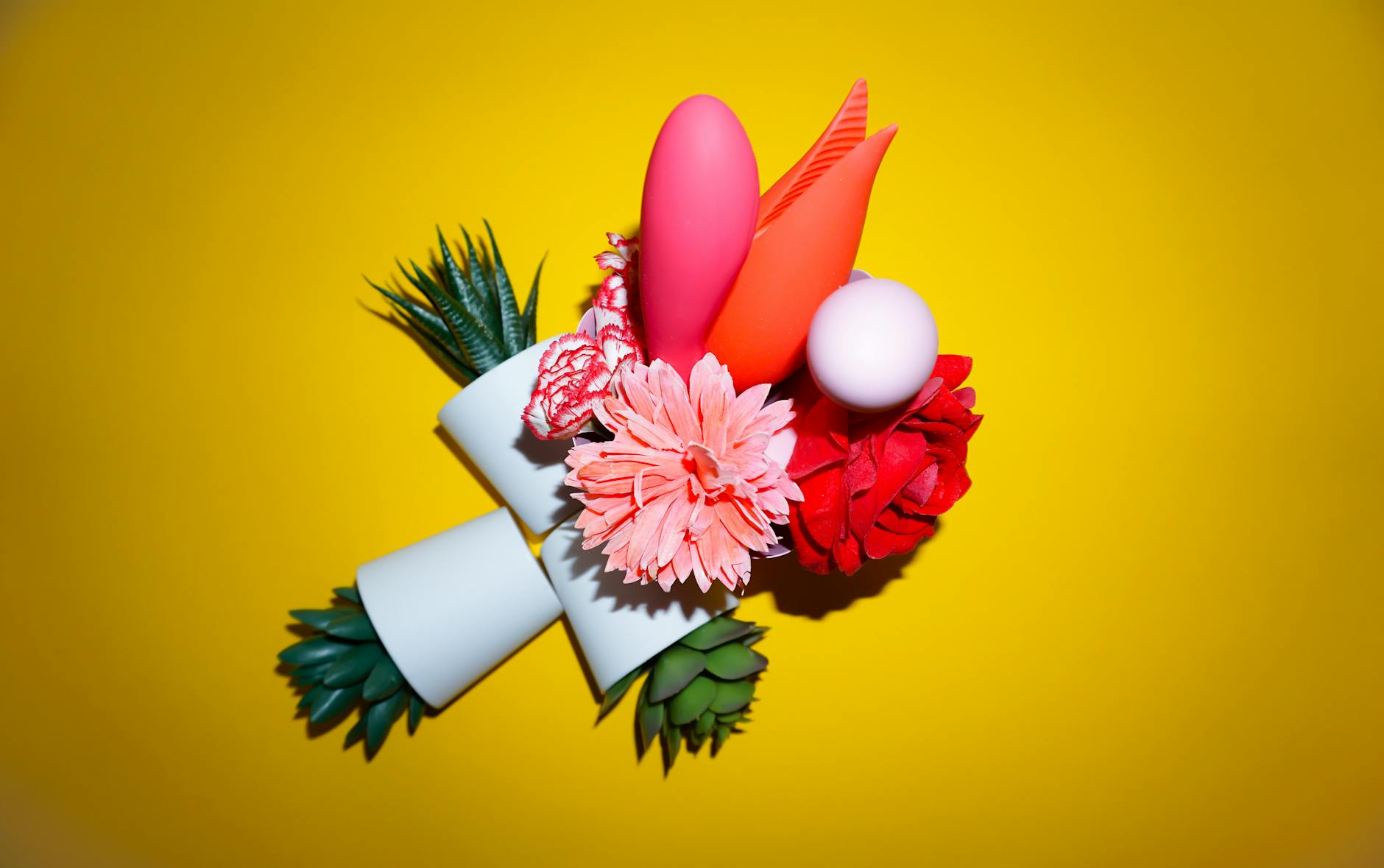
Photo by cottonbro studio on Pexels
The conversation to have (and when to have it)
Honesty first. Not in bed. Not mid-moment. Have this conversation over coffee or a walk, when you're both clothed and unhurried.
The frame matters. Don't lead with "I want to use my vibrator alone sometimes" as if you're confessing a crime. Lead with what's true: "I've noticed that my body responds better when I explore solo first. It helps me know what I actually like, which means I'm clearer in our time together."
That's not rejection phrased nicely. That's literally what solo pleasure does. It removes the pressure to perform, to read a partner, to worry about timing. You get to be selfish in the best way. And then, with that knowledge, you show up differently in partnered sex.
Your partner might feel insecure. That's normal. That doesn't mean you're wrong. Insecurity is their feeling to process, not your cue to abandon your own pleasure. Stay soft but clear. "This isn't about you. This is about me knowing my own body better. And that benefits us."
What solo time with a lemon vibrator actually looks like
You need three things: privacy, time, and zero performance pressure.
Privacy doesn't mean stealth. It means closing a door, knowing you won't be interrupted, and not having to wonder if a partner is listening. This is harder in shared homes than it sounds. You might need to schedule it. "Tuesday nights after dinner, I have an hour." That sounds unromantic. It's actually the most loving thing you can do for your relationship because it removes the anxiety.
Time matters more than duration. Twenty minutes of genuine focus is better than an hour of distraction. Put your phone in another room. You're not going anywhere. This is just you, your body, and your lemon clitoral vibrator.
The zero-pressure part is the hardest for people who've spent years making sex about a partner's satisfaction. Solo time is the place to get selfish. Use your vibrator however you want. Stop whenever you want. Build up slowly or go hard immediately. There's no wrong way because there's no one else's experience to manage.
When a partner wants to watch or participate
This is a separate conversation from the solo conversation. Some people are totally fine with a partner watching. Some aren't. Both are okay.
If you want to keep solo pleasure truly solo, say that clearly: "This time is just for me to understand my own body. I need it to be alone." A partner who loves you will get that. A partner who can't respect that is showing you something important about the relationship, and that's worth addressing separately, maybe with a therapist.
If you're open to him, her, or them being present, set that boundary too. Do they just watch? Can they touch themselves? Can they touch you? Do you want them to stay completely hands-off? Talk before, not during. Anticipation is awkward but necessary.
Using a lemon sucker when your partner has different arousal patterns
Here's a reality: you might orgasm faster alone with your lemon vibrator than with a partner. That's not a deficit in your relationship. That's a deficit in comparing apples to oranges.
When you're solo, your body knows exactly what it's building toward. There's no coordination. No "wait, slow down" or "is this okay?" It's pure signal. With a partner, you're also managing their pleasure, reading their cues, adjusting based on their feedback. Of course it takes longer. Of course it's different.
Using your lemon clitoral vibrator regularly solo actually makes partnered sex better because you stop waiting for a partner to give you an orgasm. You can guide them. You can show them what works. You can say, "Let me get there first with my vibrator, then we can shift into what you need." That's not selfish. That's collaborative.
The trust part (the thing no one talks about)
Some partners hear "I want solo pleasure" and decode it as "I'm not attracted to you anymore." That's their story, not yours. But it's worth knowing it's happening, because it explains why they might be weird about it.
Invite them into the truth. "My body works best with consistent, direct stimulation. My lemon vibrator gives me that. You give me other things. Connection. Presence. Surprise. We don't compete. We're different." Repeat this as many times as you need to. People who feel insecure need to hear the same reassurance multiple times before it lands.
If a partner continues to make solo pleasure about them, or tries to forbid it, or guilt you, that's a control issue. It's worth naming and possibly working through with a couples therapist. Because solo pleasure is not a luxury. It's a fundamental part of knowing your own body.
Practical logistics in a shared space
Lock a door. That's first. Second, set a time when a partner knows not to interrupt. Third, agree on a signal if something is genuinely urgent. None of these kill the mood. They protect it.
Some people keep their lemon vibrator in a drawer next to the bed. Some people use a small bag in the closet. Some people keep it in the bathroom. Where matters less than whether you can access it without shame or secrecy.
Communicate after. Not immediately after, but the next day: "That time alone with my vibrator really helped me relax. I'm feeling better." People who support your autonomy want to know it's working. They want to see the benefits.
What changes in partnered sex when you use your lemon vibrator solo
You become less desperate. That matters more than you think. When you haven't had a solo orgasm in weeks, partnered sex carries a lot of pressure. Now it has to deliver. When you've had regular solo pleasure, partnered sex gets to be about something other than performance. It's foreplay. It's closeness. It's the thing you do together, separate from the thing you do alone.
You also get clearer about what you like. That lemon clitoral vibrator tells you exactly which patterns your body prefers. You can bring that knowledge into the bedroom. "I like this pattern better" or "Can you move slower here?" A partner who cares about your pleasure wants this information. It's a gift.
Your communication improves. When you've spent time understanding your own body, you talk about sex differently. Not as a mystery. As something knowable, negotiable, learnable.
FAQ: Solo pleasure and partnership
Is using a lemon vibrator alone while in a relationship a sign of a dead relationship?
No. In fact, it's often a sign of a secure one. People in healthy relationships feel comfortable having independent time and independent pleasure. It's when someone feels like they have to hide it that the relationship has a problem.
What if my partner asks to throw away my lemon vibrator?
That's a boundary violation. Your body belongs to you. A partner doesn't get to control your access to pleasure. Stand firm. If he, she, or they can't accept that, relationship counseling is the next step. This isn't about the vibrator. It's about autonomy.
How often should I use my lemon sucker solo versus with a partner?
There's no right answer. Some people use their vibrator solo twice a week and see a partner once a week. Some do both more or less. Listen to your body. If you're using solo pleasure to avoid partnered sex, that's worth exploring. If you're using it to supplement partnered sex, you're probably fine.
Can my partner use my lemon clitoral vibrator on me during partnered sex?
Absolutely. That's a completely different experience from using it solo. Some people love having a partner handle the vibrator during partnered sex because it frees them to focus on other sensations. Others prefer to keep it solo. Talk about it first.
What if I have higher desire than my partner?
Then your lemon vibrator becomes essential, not optional. You have two needs: connection with your partner and pleasure for your body. Your vibrator handles one. Your partner handles the other. They're not in competition. You need both.
Is it okay to masturbate with my lemon vibrator if my partner is in the house?
Yes, if you've had the conversation and set boundaries. Privacy means they know not to interrupt, not that they don't know you're doing it. Honesty is the foundation here. Sneaking around creates distance. Open acknowledgment creates trust.
The bottom line
You don't get smaller because you're in a relationship. Your pleasure doesn't become his, hers, or theirs. It stays yours. A lemon vibrator is a tool for knowing yourself better. Using it solo isn't a rejection of partnership. It's a prerequisite for a good one. The more you know your own body, the clearer you can be about what you need from a partner. The clearer you are, the better you connect.
Start with honesty. Have the conversation. Set the boundary. Then trust that a partner who loves you will understand. If they don't, that's information worth having.
Ready to explore what your body actually wants? Start solo. You deserve that clarity, and your relationship will be better for it.
If you're navigating pleasure and partnership dynamics and want support, reach out to us. We're here to help you think through what works for your relationship.