The thing no one tells you about shame and arousal
You already know that orgasms feel better when you're relaxed. But here's what gets left out of most sex advice: the second your brain fires up shame, arousal shuts down. Not gradually. Instantly. It's like flipping a switch.
I work with a lot of people who intellectually want better orgasms, deeper pleasure, more intensity. But underneath that want sits a knot of self-consciousness. Maybe it's about being sexual at all. Maybe it's about how their body looks or sounds. Maybe it's guilt left over from religious upbringing, or the message they absorbed that "good girls" don't prioritize their own pleasure. Whatever the origin, that shame is the real barrier.
Here's what changes it: permission. And one of the most practical ways to grant yourself that permission is using a tool designed specifically to make pleasure feel intentional, separate from performance, and entirely about your nervous system waking up.
Why shame blocks orgasms in the first place
When you're self-conscious, your brain is busy monitoring. Am I taking too long? Do I look weird right now? Is my body doing the right thing? Should I be more enthusiastic? That monitoring is your prefrontal cortex running the show. And the prefrontal cortex is not an orgasm generator. It's a threat detector.
Orgasms happen when the prefrontal cortex goes offline and the limbic system takes over. That's the part of your brain responsible for sensation, emotion, and automatic physical response. The more you're watching yourself, the more your prefrontal cortex stays engaged. The more it stays engaged, the harder orgasm becomes.
This is why so many people report that their best orgasms happen when they're alone, or when they're with someone they completely trust. The self-monitoring stops. The threat detector powers down. Your body is finally allowed to do what it knows how to do.
How lemon vibrators change the equation
A lemon clitoral vibrator is a permission slip. Not metaphorically. Literally.
When you introduce a tool specifically designed to stimulate your clitoris, something psychological shifts. The pleasure is no longer about your body's "performance." It's not about speed, or rhythm, or whether you're "doing it right." The lemon vibrator is doing the work. Your job is just to feel it.
That separation is crucial. It moves pleasure from "something you have to achieve" to "something you allow yourself to receive." And that receiving mode is where better orgasms actually live.
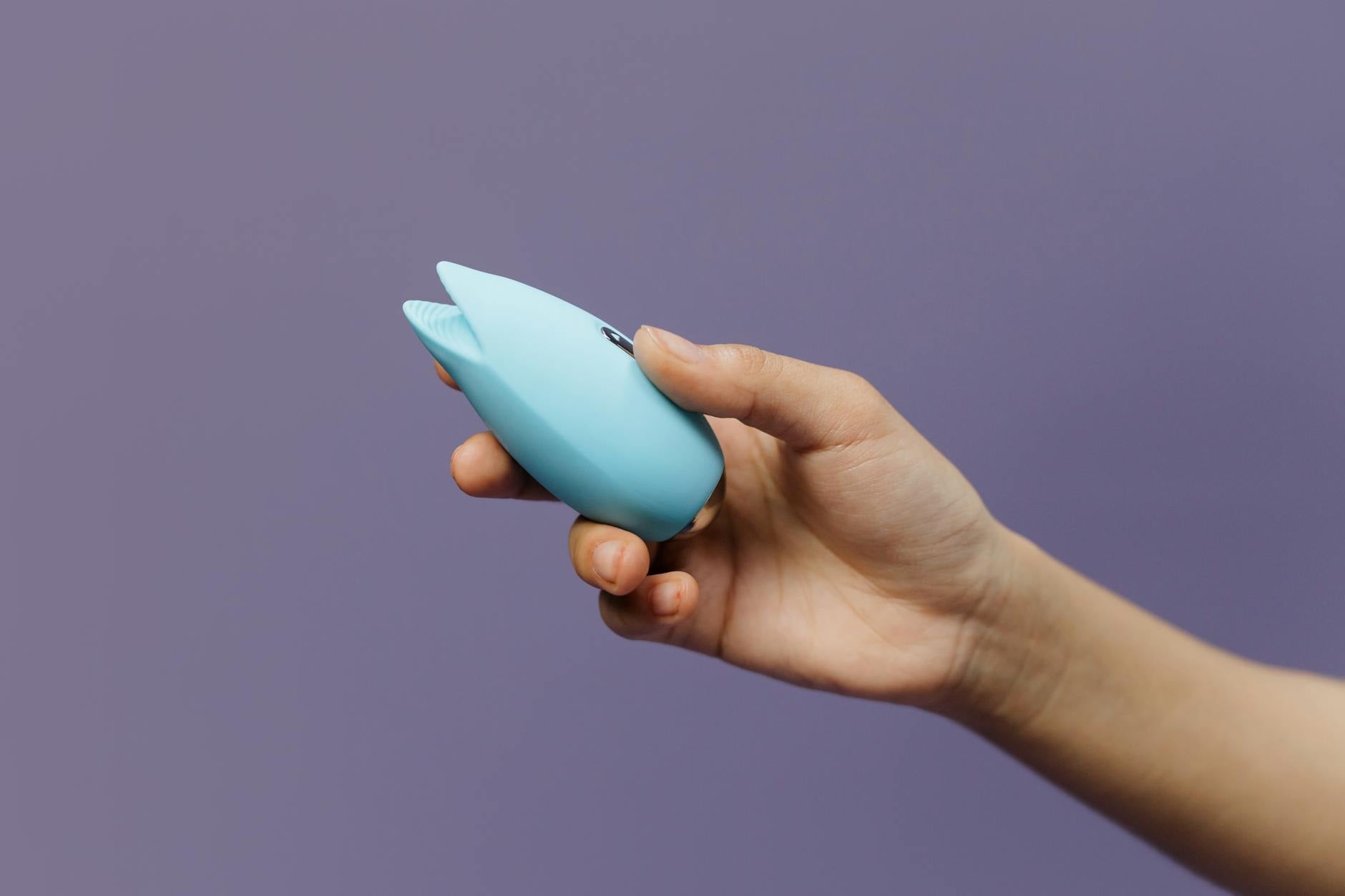
The engineering of a lemon sucker also matters. Unlike traditional vibrators that rely on speed or intense vibration, the suction-based design of Hello Nancy's Lem uses a different mechanism. It creates rhythmic pulses that feel more like a partner's mouth than like industrial vibration. For a lot of people, especially those carrying shame around their sexuality, that feels less clinical and more intimate. Less like a device, more like permission.
Starting when you're carrying shame
If self-consciousness is your barrier, how you introduce a lemon clitoral vibrator matters more than the tool itself.
First: do it alone. Not forever, but at least the first few times. Shame loves an audience. It doesn't care if the audience is real or imagined. When you're worried about a partner's reaction, you're not fully present. You're performing, not receiving. Solo exploration gives your nervous system a chance to learn what good sensation feels like without the threat detector running.
Second: don't make it a project. Don't set aside "vibrator time" with pressure attached. Just... have it in the drawer. Available. One night when you're already warm, already curious, already alone, reach for it. Treat it like you'd treat any other sensory thing you enjoy. A bath, a good meal, a song. You don't shame yourself for enjoying those. This is the same.
Third: separate the act from outcomes. You're not using a lemon vibrator to "achieve" an orgasm. That's outcome focused, and outcomes create pressure. You're using it to explore sensation. To notice what feels good. To let your body talk to you. The orgasm, if it comes, is a bonus.
What changes when shame starts to lift
One of the weird things that happens when you start exploring pleasure without judgment is that your entire nervous system recalibrates. You realize you're allowed to want something. You're allowed to feel something good intentionally.
That permission seeps into other parts of your sexuality, too. If you can use a lemon vibrator solo without shame, it becomes easier to ask for what you want with a partner. If you can admit to yourself that you like orgasms, it becomes easier to admit that you deserve them. If you practice receiving pleasure solo, you practice saying yes to yourself. And that yes gets bigger.
I've worked with countless people who reported that after a few weeks of using a clitoral vibrator without judgment, they had their first orgasm in years. Or their first intentional orgasm. Or their first orgasm that didn't come with a side of guilt. The device didn't magically change their anatomy. What changed was their brain's permission to feel it.
The practical side: how to actually start
If you're ready to try this but still nervous, here's the scaffolding.
Pick a time when you're already feeling okay about your body. Not a time when you're stressed about how you look, or tired, or just had a fight with someone you love. Pick when your nervous system is already slightly relaxed.
Create a small ritual that signals to your brain this is allowed. Light a candle. Take a few deep breaths. Put your phone away. Whatever says "this is intentional." Rituals reduce shame because they signal that this isn't something you're sneaking. It's something you're choosing.
Start with low intensity. The Lem has multiple settings. You don't need to blast yourself with sensation to figure out if this works for you. Start at pattern one or two. Let your clitoris wake up gradually.
Then just notice. Not "Am I orgasming yet?" but "What does this feel like? Where does it feel good? What happens if I shift my hips slightly? What if I breathe differently?" Curiosity, not performance. The goal is sensation, not outcome.
When shame shows up mid-session
Honestly, it probably will, at least the first few times. You're rewiring something, and rewiring takes repetition.
If you notice your brain spinning up the threat detector ("Is this weird? Should I feel guilty? What if someone found out?"), just notice it. Don't fight it. Acknowledge it exists, then gently redirect your attention back to sensation. "My brain is doing its job. That's fine. I'm still allowed to feel good right now."
You might want to read something beforehand that helps you feel less alone. A post about how lemon vibrators help when you want stronger orgasms but sensitivity gets in the way, or about how to use a lemon vibrator with a partner without making it weird. Knowing other people experience this, that you're not broken or wrong, actually does reduce shame.
Adding a partner when you're ready
You don't have to. But if you eventually want to invite someone into this, timing matters.
Wait until you've had at least a few shame-free sessions solo. You need to know, in your body, that pleasure is allowed. That it's not something you have to earn or perform for. Then, when you're with a partner, you're not introducing a lemon vibrator because you feel inadequate. You're introducing it because you've learned it feels good and you want to share that.
When you do introduce it, be direct. "I've been exploring something that feels really good. I want to show you." Not apologetic. Not shameful. Just clear. You're not asking permission. You're sharing something you've decided is okay.
Using a lemon clitoral vibrator together actually helps a lot of couples here. It removes performance pressure for both of you. Neither of you is "supposed" to make the orgasm happen. The device is. You're both just present for the sensation.
What happens when shame finally steps back
After a few weeks or months of this, something shifts. The self-consciousness doesn't vanish entirely, but it stops driving the bus. You remember that you deserve to feel good. That wanting pleasure is not a character flaw. That your body is allowed to light up without judgment or guilt.
Orgasms become different when that background hum of shame quiets down. They feel fuller. Longer. More yours. Not something you're chasing or proving, but something you're simply allowing yourself to experience.
That's the real power of a lemon vibrator when shame is the barrier. It's not magic. It's permission, delivered through sensation.
FAQs on shame and pleasure with lemon vibrators
Is it normal to feel guilty using a vibrator even though I want to?
Completely normal. Guilt around pleasure is incredibly common, especially if you grew up with messages that sexuality is shameful or that good people don't prioritize their own desire. The guilt doesn't mean you shouldn't use a vibrator. It means your nervous system picked up a protective message somewhere. Using a lemon vibrator solo, without judgment, is actually one of the best ways to slowly reprogram that message. The guilt often fades with repetition and self-compassion.
How long does it usually take for shame to stop blocking orgasms?
It varies. Some people notice a difference in 2-3 sessions. Others take weeks or months. It depends on how deep the shame runs and how much self-compassion you can bring to the process. The key is consistency without pressure. Using a lemon vibrator once a week with zero shame is more effective than using it three times a week while judging yourself.
Can I use a lemon vibrator if I'm worried about what a partner would think?
Yes, and solo use is actually the right place to start. You need to know, in your own body, that pleasure is allowed before you can invite someone else into it. Once you've had shame-free sessions alone, the conversation with a partner becomes easier. You're not asking for validation. You already know it feels good.
What if I use a lemon vibrator and still don't orgasm?
Orgasms are not the goal here. Sensation is. Sometimes when people stop trying to achieve an orgasm and just explore what feels good, orgasms show up as a bonus. But even if they don't, you're still rewiring your relationship with pleasure. You're still teaching your brain that wanting to feel good is allowed. That's the real win.
Is it weird to use a lemon clitoral vibrator if I'm not very sexual normally?
Not at all. Sometimes people think they're not very sexual because they've never actually explored what pleasure feels like without shame or pressure attached. A lemon vibrator can help you discover that you might actually be plenty sexual. You just hadn't given yourself permission to find out yet.
How do I know if a lemon vibrator is right for me if shame makes trying new things feel risky?
Start small. The Lem is designed with low intensity settings specifically so you can explore gradually. You're not committing to anything. You're just testing a sensation. And if it doesn't work for you, that's useful information too. But most people who are curious enough to ask this question find that a well-designed lemon sucker removes enough pressure that pleasure actually becomes possible.