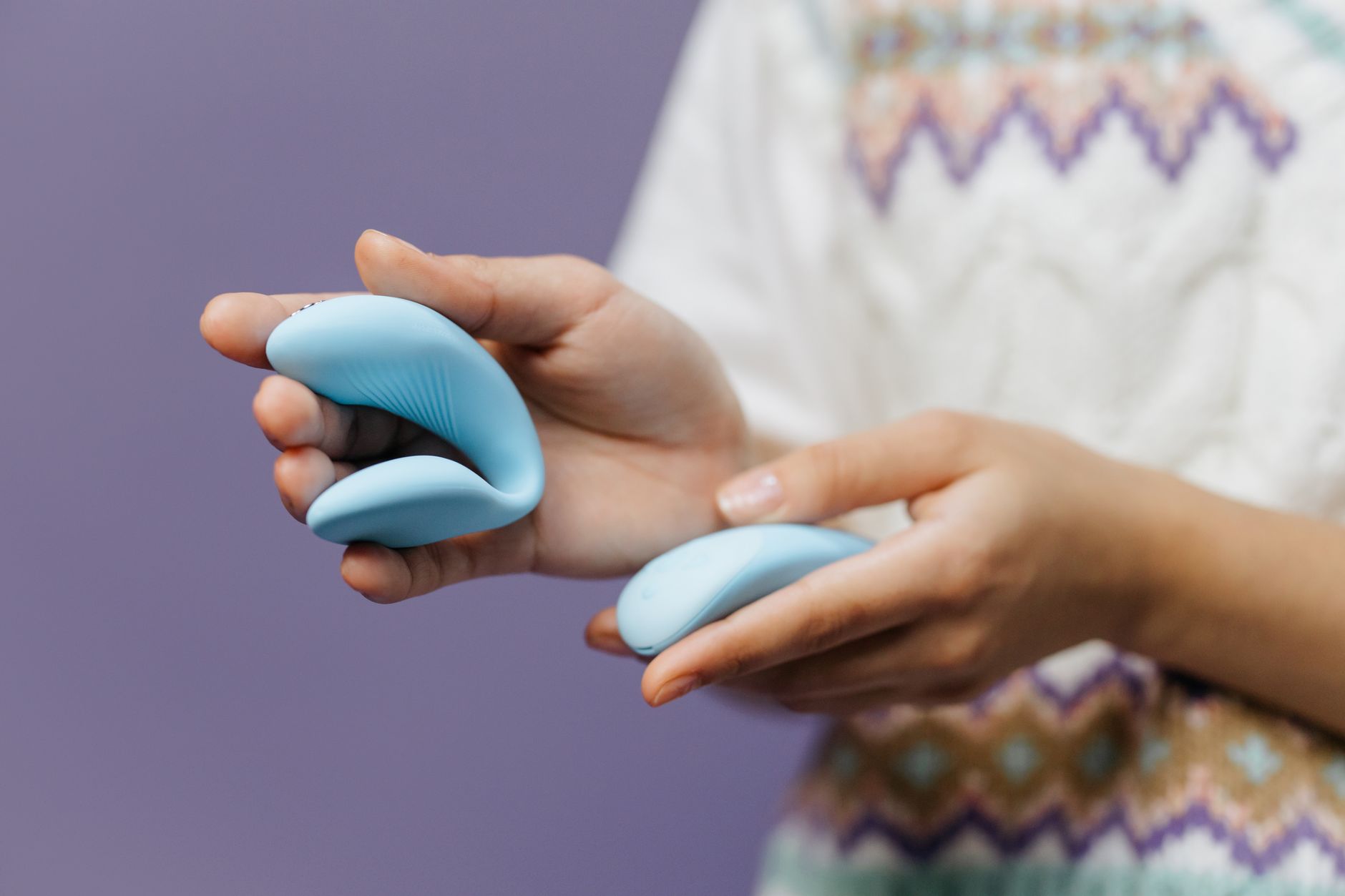
The real issue with new partners and vibrators
Let's be honest. You want to feel good in bed with someone new. You also know that your body responds best to specific kinds of touch. A lemon clitoral vibrator is often exactly that. But bringing it up feels loaded, like you're saying your partner isn't enough, or you're admitting something you should be able to hide.
You're not saying either of those things. You're saying: here's what helps me feel amazing, and I trust you enough to show you. That's actually the fastest way to build real intimacy.
Why new relationships need this conversation early
Early sex with someone new is already high-pressure. Your body is still calibrating to theirs. Hormones are flooding your system. You're monitoring whether they seem into it, whether you're being too vocal, whether your breath smells okay. That mental load alone tanks pleasure.
If you wait six months to mention that you use vibrators, you've now built six months of sex around pretending you don't. You've trained your partner to think that's what works. You've trained yourself to fake it. Neither of those patterns is fixable without a conversation that feels bigger than it needs to be.
Introduce it early. Make it normal. You're not asking permission. You're sharing information about what your body needs to feel good.
The timing conversation (it's not about the timing)
Most people ask: when do I bring this up? The actual answer is: whenever feels natural, as long as it's before you're in bed together trying to figure it out.
That could be a text. "Hey, I like to use a vibrator during sex. Something I want you to know about me." Could be a conversation over coffee. Could be a casual mention during foreplay if you're already comfortable. The medium matters less than the fact that it's not a surprise mid-session.
What you're really doing is normalizing it. You're saying this is part of who you are sexually, and you're making room for them to ask questions or share their own stuff. That's how you actually build connection.
What to actually say (scripts that work)
Keep it simple. You don't need to give a TED talk about your pleasure needs.
"I use a vibrator during sex. It helps me get there consistently. I'd like to have one with me when we're together." That's the whole thing. If they ask why, tell the truth: "My body responds really well to it. It's not a commentary on you. It's just what works for me."
If they seem hesitant, here's the follow-up: "I'd love your help figuring out how this works for us. We can try different things and see what feels good." You're inviting them into the process, not presenting it as a demand.
If they push back with something like "I should be able to do that for you," that's actually a red flag about control, not a sign that you're asking for something unreasonable. A partner who can't make space for your pleasure without making it about their ego is showing you something important early. Pay attention to that.
Why lemon vibrators work especially well in new relationships
Lemon clitoral vibrators like the lemon sucker designs are intuitive. Your partner doesn't need to be an expert to understand how to use one. They're not intimidating like some of the more complex vibrators. And because they work through suction and pulsing rather than direct vibration, they feel less jarring if your partner is holding it.
That matters when you're new together. You want something that your partner can incorporate naturally into what you're already doing, not something that requires a technical manual or completely changes the dynamic.
A lemon clitoral vibrator also signals that you're invested in feeling good, not that you're compensating for something missing. That distinction matters psychologically, both for you and for how a new partner receives the information.
The practical choreography
Here's what actually happens when you're using a lemon vibrator with someone new for the first time.
Start with it during foreplay before penetration, if that's part of your routine. Use it on yourself while they're touching you elsewhere. This does two things: it keeps you in control of the sensation (especially important when you're still figuring out what you like with this person), and it lets your partner see what turns you on without putting them in charge of something they've never done before.
After a few times, they'll probably want to help. Let them. Guide their hand if needed. "A little lighter," or "That's perfect, keep doing that." You're teaching them your body's language. That's actually deeply intimate.
If penetration is part of your sex life together, you can use a vibrator during that too, but again, start with you controlling it. Once you both feel confident, your partner can hold it while you focus on other sensations. There's no one right way. You're figuring out what feels good to you both.
The emotional part (which is bigger than the practical part)
Using a vibrator with a new partner requires vulnerability. You're saying: this is what I need. You're trusting them not to shame you or make it weird. You're also trusting yourself to know what you like and advocate for it.
That's the real intimacy. Not the vibrator. The fact that you're willing to ask for what you need.
If your partner responds with curiosity and openness, they're showing you that they care more about your pleasure than their ego. Keep that person. If they respond with defensiveness or rejection, you've learned something crucial about them in week three instead of month six. That's actually valuable information.
Common worries, addressed
"Won't they think I'm oversexed or weird?" If showing your partner that you know your body and want to feel good reads as weird to them, that's their limitation, not yours. You deserve a partner who thinks your pleasure is hot, not threatening.
"What if they want to take over completely?" Set a boundary. "I like using it myself," or "Let's start with me showing you how I like it." You're in control of your own body. A partner who respects that is someone worth keeping around.
"Is it too early?" If you're having sex, it's not too early. You're sharing information about what your body needs. That's not asking too much. That's asking for the bare minimum: the space to feel good.
When to escalate or change the dynamic
Once you've used your lemon vibrator together a few times and it feels normal, you can experiment. Maybe they use it on you while you're inside them. Maybe you use it during a different position. Maybe you discover you want something different entirely.
The key is that the first step makes all the rest easy. By normalizing it early, you've built a framework where you can keep talking about what you both want. That's not just better sex. That's a better relationship.
The bigger picture
Partners who are worth your time will understand that your pleasure matters. A lemon clitoral vibrator isn't a substitute for connection. It's a tool that helps you feel your best so you can actually be present with someone you like.
Using one with a new partner isn't awkward. It's honest. And honesty, especially about something as vulnerable as pleasure, is where real intimacy starts.
People also ask
How do I introduce a vibrator to my new partner without making them feel insecure?
Frame it as information about your body, not a judgment about their performance. Say something like: "I want to feel amazing with you. Here's something that helps me get there. I'd love your help." You're inviting them into your pleasure, not criticizing them. A secure partner will get that immediately.
Should I use a vibrator alone first or introduce it to my partner right away?
You should already know what you like by the time you're with a new partner. If you're still exploring, use one by yourself first. But you don't need to hide it once you're in a sexual relationship. Bring it up naturally, early, and make it part of your routine together.
What if my new partner feels threatened by vibrators?
That's information. A partner who feels threatened by your pleasure isn't the right fit. You deserve someone who wants you to feel good, period. This reveals a lot of important things about how they see relationships.
Can I use lemon vibrators with any kind of sexual activity?
Yes. They work during foreplay, during partnered sex, during different positions. The vibrator adds pleasure without replacing what you're already doing. Just communicate with your partner about when it feels good to use it.
How often should I use a vibrator with a new partner?
As often as you want to. There's no rule. Some people use one every time. Some people use one occasionally. What matters is that it feels good and that you both consent to it. Let your preference guide you.
Is it normal to want vibrators more with a new partner?
Completely normal. New relationships have novelty and intensity. You're more turned on, more present. Of course you want to feel your best. That's healthy. That's what vibrators are for.
Bottom line
You deserve consistent pleasure, even (especially) in new relationships. A lemon vibrator isn't a secret or a compromise. It's part of knowing yourself and having the confidence to ask for what you need. The right partner will be into that. The wrong partner will show you early. Either way, you win.