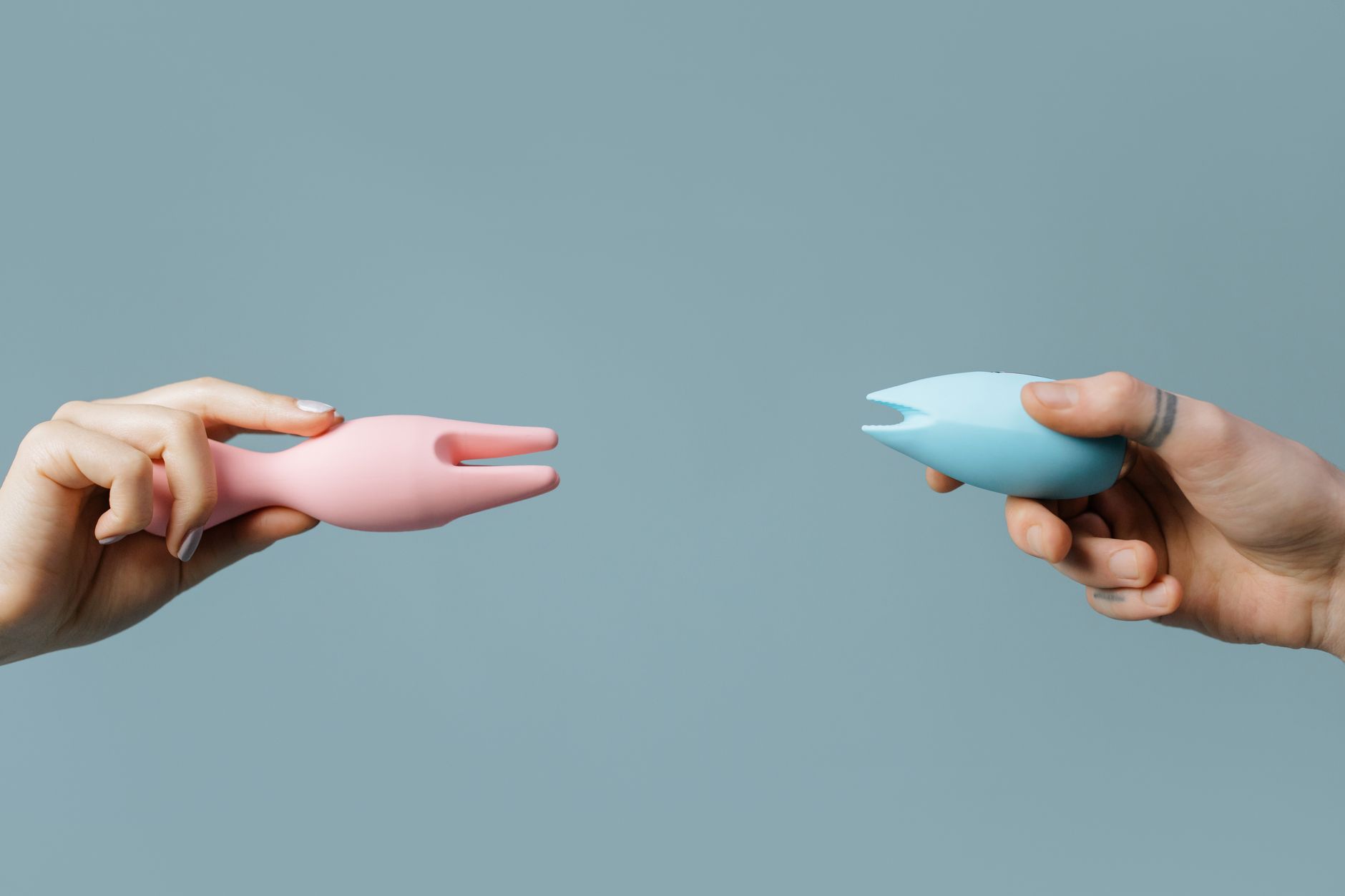
Let's talk about the nervous system hijack
You want to feel pleasure. Your body wants to feel pleasure. But somewhere between intention and sensation, anxiety arrives and shuts the whole thing down. This isn't laziness. It isn't frigidity. It's neurobiology.
When your nervous system perceives threat—even a vague, background-noise kind of threat like "Am I taking too long?" or "What if someone hears?" or "What if I can't come?"—it switches into sympathetic dominance. Your fight-or-flight system activates. Blood vessels constrict. The clitoris becomes less sensitive. Arousal flatlines.
You can't think your way out of this. Willpower doesn't touch it. But there's a protocol that works, and it starts long before you touch a lemon vibrator.
Why anxiety blocks sensation
The autonomic nervous system has two main branches: parasympathetic (rest and digest, where pleasure lives) and sympathetic (fight-or-flight, where anxiety lives). When anxiety is present, your nervous system has picked a side, and it's not the one that feels good.
Here's what happens physiologically. Cortisol and adrenaline spike. Blood redirects away from your genitals and toward your large muscles. The vagus nerve, which is crucial for pleasure response, gets suppressed. Your brain is literally scanning for danger instead of processing sensation.
This is not a character flaw. This is your nervous system doing exactly what it evolved to do. The problem is that modern anxiety often has no real danger attached to it. Your system is running a survival protocol when there's nothing to survive.
The grounding work comes first
Before you use any lemon clitoral vibrator, you need to downregulate your nervous system. This takes 10 to 20 minutes, and it's non-negotiable if anxiety is your blocker.
Here's what I recommend to almost every client.
Box breathing. Inhale for 4 counts. Hold for 4. Exhale for 4. Hold for 4. Repeat for 2 to 3 minutes. This is the fastest way to signal to your vagus nerve that you're safe. It genuinely rewires the response.
Progressive muscle relaxation. Tense every muscle group for 5 seconds, then release. Calves, quads, glutes, abdomen, chest, shoulders, arms, hands, face. This teaches your nervous system the difference between tension and relaxation. You need to know what safety feels like in your body before pleasure can land.
5-4-3-2-1 sensory grounding. Name 5 things you see, 4 you can touch, 3 you hear, 2 you smell, 1 you taste. This pulls your brain out of anxiety spirals and anchors it in the present moment. Anxiety lives in the future. Pleasure lives in now.
Do these BEFORE you reach for your lemon vibrator, not as an afterthought.
How to use a clitoral vibrator when your nervous system is still skeptical
Once grounding work is done, introduce the toy slowly. This is where most people rush, and it's where they fail.
Start with the vibrator off. Just hold it. Let your nervous system get used to the object. You're essentially teaching your body that this thing is not a threat. Spend a few minutes just touching it, feeling the silicone, noticing the weight in your hand.
Then turn it on at the lowest setting. Not on your clitoris yet. On your inner thigh, your labia, your perineum. Your clitoris is the most sensitive part of your body. If you're anxious, introducing sensation there immediately will trigger a startle response. Work your way inward.
Use the lemon sucker motion slowly. If you're using a lemon vibrator specifically, the suction pattern is gentler than direct vibration for anxious nervous systems. The pulsing sensation actually feels more like a massage than a shock. Let it sit for 10 to 15 seconds at a time. Breathe. Notice what you feel. Move away if you feel tension building.
The goal is not an orgasm. The goal is proof to your nervous system that this is safe.
Building tolerance gradually
Anxiety doesn't resolve in one session. Your nervous system has learned a pattern, and it will take repetition to teach it a new one. Think of this like physical therapy, not performance.
I recommend starting with 2 to 3 minute sessions, once or twice a week, with zero pressure for any particular outcome. Your only job is to notice sensation without judgment. Can you feel the vibration? Does it change when you breathe? What happens if you relax your pelvic floor?
Over weeks, your nervous system will start to recognize the pattern: vibrator, safety, pleasure. Cortisol drops. Vagal tone improves. One day you'll notice that arousal builds more easily. That the sensation feels less jarring. That your body is cooperating instead of resisting.
Then you can gradually increase intensity, duration, and frequency.
The role of your environment
Your nervous system is exquisitely sensitive to environmental cues. If you're anxious about being heard, your amygdala will stay activated no matter how good the lemon clitoral vibrator feels. Address this directly.
If privacy is the issue, lock the door. Use white noise. Tell your partner you need uninterrupted time. These aren't luxuries. They're preconditions for your nervous system to shift out of threat mode.
If the anxiety is more free-floating (not tied to a specific fear), pay attention to lighting, temperature, and scent. Warm rooms signal safety more than cold ones. Dim lighting beats bright. A scent you love (candle, perfume, essential oil) gives your nervous system a positive sensory anchor.
You're essentially creating a "safe container" where your body can finally believe that pleasure is possible.
When to bring a partner into this
If you have a partner, solo practice with your lemon vibrator is where you start. You need to prove to yourself that your nervous system can relax into pleasure on your own terms, without anyone else's expectations in the room.
Once you've done that (usually 2 to 4 weeks of regular sessions), you can introduce a partner. But not as a spectator. As a co-regulator.
Have your partner stay close but not touching. Use the same grounding techniques together (box breathing, for instance). Let them know what you're working on: "I'm teaching my nervous system that this is safe." This takes all the performance pressure off. They're not there to witness pleasure. They're there to help create the conditions for it.
Many of my clients find that partner presence actually accelerates the process because a regulated partner's nervous system helps regulate theirs. This is called co-regulation, and it's one of the most powerful tools in long-term relationships.
FAQ: Anxiety and pleasure
Q: How long does it take for anxiety to stop blocking arousal? A: Usually 4 to 8 weeks of consistent practice, assuming you're doing the grounding work first. Everyone's nervous system is different. Some people see shifts in 2 weeks. Others need 12. Patience matters more than speed here.
Q: Is it normal to feel nothing the first few times I use a lemon vibrator? A: Completely normal. You're asking your nervous system to relax after months or years of activation. Numbness is often the first phase. Sensation returns as your vagal tone improves. Don't interpret numbness as failure.
Q: Can medication help with anxiety-related pleasure problems? A: Sometimes. SSRIs can reduce anxiety but may also numb sensation. Talk to your doctor about this trade-off. Some people find that medication gives them enough breathing room to do the nervous system work. Others prefer to address it through grounding techniques first. There's no universal answer.
Q: What if I have a trauma history? A: Trauma significantly alters nervous system responses. If your anxiety is tied to trauma, working with a therapist trained in trauma (EMDR, somatic experiencing, or CPT) is valuable. A lemon vibrator can be part of the healing process, but it's not a substitute for professional support.
Q: Should I use my lemon clitoral vibrator with a partner present from the start? A: No. Solo practice first. Once your nervous system learns to relax alone, partner presence becomes additive, not destabilizing. Trying to do this with a partner watching from day one will likely trigger more anxiety, not less.
Q: What's the difference between anxiety and just being tired? A: Anxiety presents as mental tension, racing thoughts, or a sense of impending doom. Fatigue presents as heaviness and low motivation. They can co-exist. If you're exhausted, rest first. If you're anxious, grounding work first. If it's both, address the fatigue through sleep and the anxiety through nervous system regulation.
The real timeline
Here's what I want you to know. Rewiring an anxious nervous system takes time. It's not linear. Some weeks you'll feel massive progress. Other weeks you'll feel stuck. This is completely normal. Your nervous system has spent months or years learning to activate around pleasure. It will take sustained, gentle practice to teach it something different.
The lemon vibrator is not a fix. It's a tool. The actual work is the grounding, the patience, the willingness to feel sensation without demanding immediate results. Once your nervous system believes you're safe, pleasure will follow. And it will be deeper than you expected, because it will finally be coming from a truly relaxed place.
If you feel stuck after 8 to 10 weeks of consistent practice, consider talking to a therapist trained in somatic work. Sometimes there's a deeper pattern that needs professional attention, and there's no shame in that.
Your pleasure is worth the investment. So is your nervous system's sense of safety.
Ready to explore more about using lemon sexual toys and clitoral vibrators intentionally? <a href="/blog/how-to-use-lemon-vibrators-when-you-want-pleasure-but-dont-have-much-time">Learn how to build pleasure practice into a busy life</a>, or <a href="/blog/how-to-use-lemon-vibrators-when-clitoral-sensation-feels-overwhelming">discover how to manage intensity if sensation feels like too much</a>.