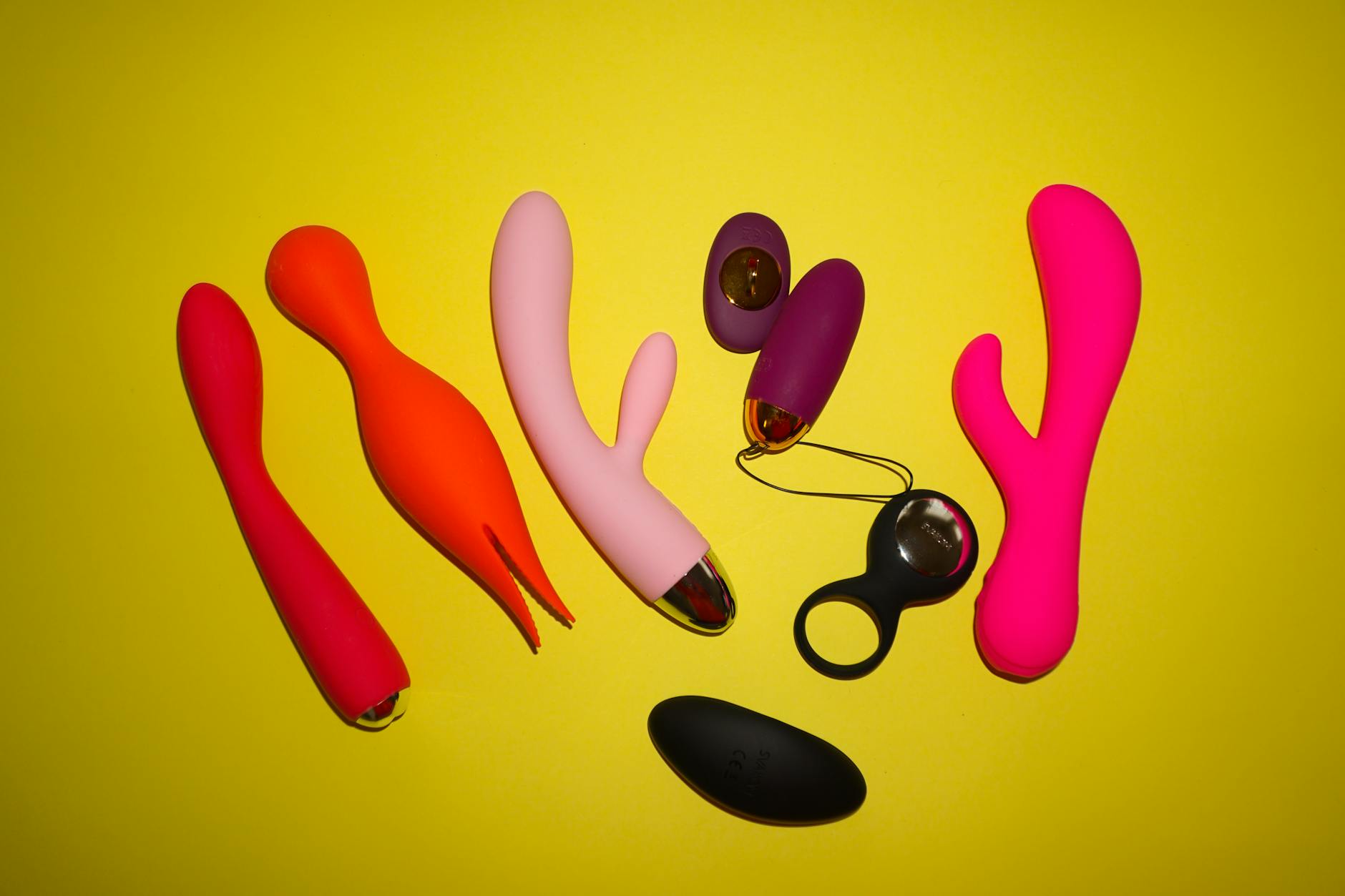
Let's talk about the thing nobody mentions
You want to use a vibrator. You've maybe looked at lemon vibrators or other clitoral toys online, felt a mix of curiosity and dread, and then closed the tab because the whole scenario felt too clinical or too exposed. That's completely normal, and it's also completely fixable.
The gap between "I think I want this" and "I'm actually holding one" is filled with three things. Mental friction (am I weird for wanting this?). Physical friction (where do I even touch?). And logistical friction (what if someone finds it, what if it's uncomfortable, what if nothing happens?). We're going to walk through all three.
The mental part comes first
Here's what I hear in my office: "I feel like I should already know how to do this." "Using a toy feels like cheating on my pleasure." "What if my partner thinks I'm rejecting them?" None of these are stupid. They're just beliefs that need to be untangled before your body can relax enough to feel anything.
First fact. Using a lemon clitoral vibrator has nothing to do with your partner or your adequacy. A vibrator is a tool that does one specific job: it delivers consistent, targeted stimulation to the clitoral nerve cluster. Your brain does the rest. If your brain is busy judging you, your nervous system stays locked in threat mode and pleasure becomes impossible. So the first step is actually permission, not technique.
That permission sounds like: "I deserve to feel good. My pleasure is legitimate. This is a normal tool, not a sign that something is wrong with me or my relationship."
Take 30 seconds and say that out loud. Not because I'm a therapist who believes in affirmations, but because hearing your own voice saying something makes your nervous system treat it differently than just thinking it.
What your body does when it's actually relaxed
Relaxation isn't the absence of arousal. It's the opposite of tension. When your nervous system believes you're safe, blood flow redirects to your genitals, your pelvic floor muscles soften, and sensation amplifies. When you're clenched (physically or mentally), blood is busy elsewhere, muscles are contracted, and the whole system gets muted.
A lemon vibrator works brilliantly for beginners because it meets your body where it actually is. The suction design stimulates through skin contact without requiring the direct friction that feels overwhelming if you're not already very aroused. That's not a limitation. That's exactly why it's such a useful entry point.
Before you even turn it on, here's the setup that actually works:
Choose a space where you won't be interrupted. That means a closed door, a time when you're alone, and your phone either silent or in another room. Interruption anxiety kills more orgasms than anything else. Next, get horizontal on your bed or a comfortable surface. Gravity works against you sitting up; lying back lets your pelvic floor relax naturally. Have water nearby and maybe a blanket because your body temperature drops after orgasm and that contrast is jarring if you're not prepared for it.
Then set an actual timer for 20 minutes. Not because you need to rush, but because removing the "how long should this take" question from your brain is surprisingly useful. You're not racing toward a finish line. You're exploring.
The first session is about sensation, not outcomes
This matters so much that I'm putting it in its own section. Your job right now is not to have an orgasm. Your job is to notice what feels like anything at all.
Start with the vibrator off. Hold it. Notice the weight, the texture, the temperature. This is boring but essential because you're teaching your nervous system that this object is safe. Then apply it gently to your inner arm or your collarbone. Not the most sensitive place. Just notice the vibration pattern against normal skin.
Once that feels fine, you can move to your external genital area. For a lemon vibrator specifically, start at the mons pubis (the area above your clitoris, with hair or without depending on your body). This is less sensitive than the clitoris itself, so if you're nervous, it's a better first stop.
Turn it on the lowest setting. The Lem, for instance, has multiple patterns. Start with the simplest, slowest one. You're not looking for intense sensation. You're looking for "oh, I feel that." Most of the nerves around your clitoris are clustered at the top, which is why direct stimulation there feels intense. The surrounding tissue gives you a gentler learning curve.
Maintain contact for 30 seconds to a minute. What you're doing is calibrating. Is it too intense? Move it slightly off center. Not intense enough? Move closer to the clitoral area or try the next pattern up. There's no "right" answer here. You're gathering data about your own body.
When nothing happens, that's still data
A lot of first sessions end with "well, that was... fine." Not transcendent. Not even a strong orgasm. Just fine. That's actually the most honest outcome, and it's also completely okay.
Why? Because you've just taught your body that this tool exists, that it's safe, and that you get to spend time exploring pleasure without pressure. That's the actual win. Orgasm is a bonus that often shows up in session two or three, once your nervous system stops cataloging all the reasons to be tense.
If you felt nothing at all, it could be tension (mental or physical). It could be that you needed more time to warm up. It could be that you're on medication that affects sensation. It could be that the intensity level isn't quite right. None of these are failures. They're just information that you'll use next time.
Some people feel more sensation with the toy angled differently. Some need more foreplay before a vibrator feels good. Some do better in the evening after a drink or in the morning after sleep. Some find that starting with thoughts or images that turn them on matters more than they expected. These are all normal variations, not signs of brokenness.
Building the routine that sticks
Once you've done that first session, the next step is consistency without pressure. I recommend setting a regular time, maybe two or three times a week, where you block off 20 minutes and explore again. Not because pleasure is a chore that needs a calendar. But because your nervous system learns patterns through repetition.
The body is lazy in a useful way. If you're introducing something new, it takes a few repeats before arousal starts to flow automatically instead of requiring conscious effort. This is why "use it once, see if you like it" doesn't work. The real question is whether you like it after three or four sessions, once you've moved past the setup anxiety and the novelty.
If you have a partner, they don't need to know yet. Solo pleasure is yours to explore alone. When and if you decide to share, that's a different conversation. But right now, the goal is to build a relationship with your own body's capacity for pleasure, separate from anyone else's involvement or judgment.
For beginners, a lemon clitoral vibrator is genuinely clever because it's discreet, relatively quiet, intuitive to use, and because the suction mechanism matches how many people's bodies naturally respond best. You're not starting with the most intense sensation. You're starting with something gentle that still delivers real stimulation.
Your pleasure is not a luxury. It's a form of self-care that rewires your nervous system to function better, and it absolutely deserves your time and attention.
Common questions people don't ask out loud
One more thing. If you're worried that using a vibrator means you're dependent on it for pleasure, that's not how nervous systems work. The vibrator is a tool, not a requirement. Many people find that once their body understands what pleasure feels like with one, they can access it without one too. It's like learning to ride a bike with training wheels. The wheels help you learn. You're not magically broken once you take them off.
If you're worried that solo pleasure affects your desire for partnered sex, the opposite is usually true. People who have a robust solo pleasure practice often find that they have clearer signals about what they actually want with a partner, which makes partnered sex better.
If you're worried that you're too old, too numb, too trauma-affected, or too whatever to feel pleasure, I'll just say this. Pleasure isn't a fixed trait. It's a capacity that can be rebuilt, even from scratch.
Start with the mental permission. Then the safe space. Then the tool. Then the time. The sensation will follow.
People also ask
What should I use to clean a lemon vibrator after the first time?
Wash it with warm water and a small amount of mild soap, then dry it completely. If it's waterproof (most modern lemon clitoral vibrators are), you can run it under warm water. Silicone toys are forgiving. Don't overthink the cleaning. Just rinse it and dry it before you store it.
Can I use a lemon vibrator if I've never had an orgasm?
Yes, and sometimes a vibrator is exactly how someone discovers what an orgasm feels like. That said, the vibrator isn't magic. It's just consistent stimulation. If you've never had an orgasm, the first session with a lemon sucker should still be about sensation, not outcome. Many people find that the first orgasm happens in session three or later, once the nervousness wears off.
Is it normal to feel nothing the first time?
Completely normal. Your nervous system is busy assessing whether this is safe, your pelvic floor is probably tense even if you don't realize it, and your brain might be narrating the whole experience instead of being present. This is why a second session often feels totally different. You've already gone through the anxiety phase once.
How long does it take to have an orgasm with a lemon vibrator?
For beginners, typically 15 to 30 minutes of stimulation, but this varies wildly. Some people come in five minutes. Some take 40. The time isn't a measure of anything except your particular nervous system on that particular day. Stress, hormones, what you ate, how much sleep you got, medication, all of it affects the timeline. The goal isn't speed. It's understanding what your body needs.
Is there a right way to position myself?
Lying on your back with a pillow under your hips is the most common because gravity helps and your pelvic floor stays relaxed. Some people prefer sitting up. Some prefer side-lying. The right way is the way that lets your pelvic floor relax and your thighs stay open without strain. That's it. Every body has different proportions. Trust yours.
What if I can't stop my pelvic floor from clenching?
That's a sign you're still in tension. Back off from the intense sensation for a moment. Breathe more deliberately (three counts in, hold one, four counts out). Some people find that relaxing their jaw or their shoulders helps the pelvic floor release automatically. Some benefit from exploring lemon vibrators specifically because the gentler suction doesn't trigger the same clenching response that direct pressure does.
Starting is the real work
The first time with a lemon clitoral vibrator isn't usually transcendent. It's usually just the beginning of something that becomes better the more you do it. The mental barriers are real, the logistics are annoying, and the actual sensation in session one is often underwhelming. That doesn't mean you're broken or wrong. It means you're normal and your nervous system needs time to trust what's happening.
If you're ready to explore but still feeling stuck on the conversation about how this all even starts, reaching out to chat through specifics can help. You deserve clarity and confidence before you buy anything. That's what we're here for.