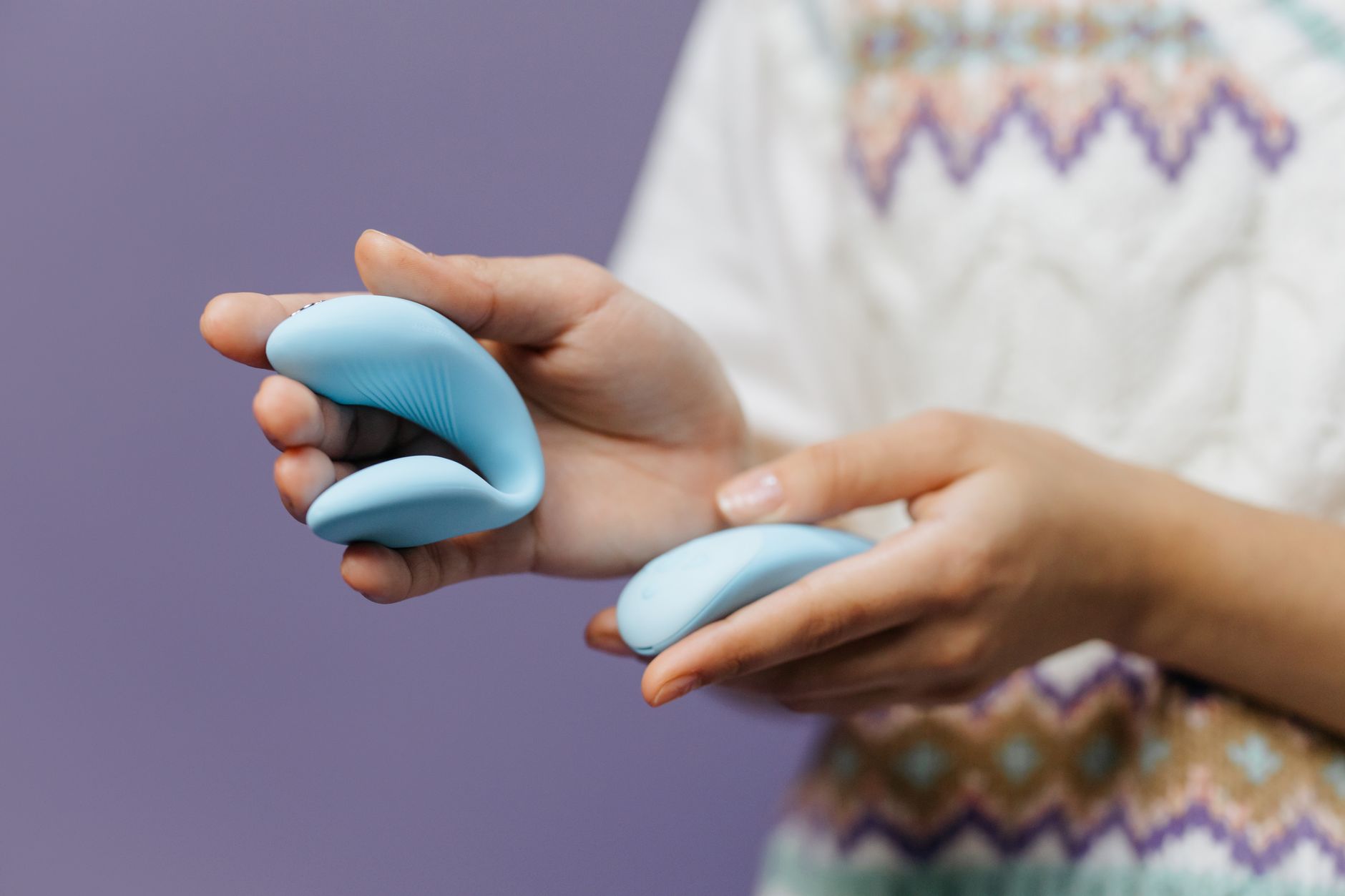
Here's the thing about performance anxiety
Performance anxiety isn't about whether you're "good enough." It's about your brain hijacking your body. You're lying there thinking about whether you're taking too long, whether your partner is bored, whether something's wrong with you. And the moment you start thinking, pleasure leaves the building.
What most people don't realize is that this spiral happens in the brain first. Your nervous system stays in fight-or-flight mode. Blood doesn't flow where it needs to. Arousal stalls. And then you panic because nothing's happening, which makes nothing happen faster. It's a trap.
The good news: lemon clitoral vibrators can actually interrupt this cycle. Not because a vibrator is magic, but because of how they work neurologically and psychologically.
Why vibrators bypass performance anxiety
When you use a lemon vibrator, you're not trying to get aroused through partnered stimulation or your own hand. You're getting targeted, consistent stimulation that your brain doesn't have to "perform" to receive. This matters more than it sounds.
Here's what happens: the suction and pulsing patterns of a lemon clitoral vibrator send a clear signal to your nervous system. They short-circuit the overthinking. You can't simultaneously monitor your partner's reaction and feel the precise stimulation from the vibrator. Your brain has to choose. Most people choose sensation.
Second, there's permission built in. Using a vibrator is explicitly about your pleasure. It's not about finishing quickly or proving anything. It's about sensation, full stop. That mental reset alone changes what's possible.
Starting solo to rebuild confidence
If performance anxiety has been your companion for a while, the best entry point is solo exploration. I know that sounds obvious, but most people skip it and jump straight to partnered use.
Here's how to start:
Pick a time when you have privacy and zero time pressure. Not lunch break. Not "I have 20 minutes before they get home." Actual time. Thirty to forty minutes is the target, though you might use fifteen.
Start with a lemon vibrator at a low pattern. Not because you need gentle, but because low patterns feel less intense psychologically. They give your brain permission to relax into it. Once you're used to sensation, you can turn patterns up.
Don't go in chasing an orgasm. Seriously. Go in chasing sensation. What does pattern one feel like? Pattern two? Where on your body feels best? What rhythm makes you want to slow down or speed up? This is information gathering, not performance.
Most people find that without the pressure to finish, arousal builds naturally. The body responds when the brain stops yelling at it.
The partner conversation
If you want to move from solo use to partnered pleasure, you need to tell your partner what you're doing and why. Not as a confession. As information.
"I've been using a vibrator on my own to figure out what feels good without pressure. I'd like to use it with you sometimes too." That's it. No apology. No explanation of what's wrong with you.
Here's what changes when a partner is involved and you're using a lemon vibrator: their role shifts. They're not responsible for your orgasm. They're present while you feel good. That's fundamentally different from the dynamic that created anxiety in the first place.
You can hold the vibrator yourself. You can let them hold it. You can use it during partnered sex or separately. The point is you're controlling stimulation, not hoping it happens to you.
What slow reintegration looks like
If you've been avoiding partnered pleasure altogether because of anxiety, reintroduction doesn't mean jumping back into sex.
Start with non-penetrative touch. Kissing. Hand holding. Massage. Let your nervous system remember that touch doesn't have to lead somewhere. It can just be touch.
Then add the vibrator into that context. Maybe you're cuddling and you use a lemon clitoral vibrator while they're next to you. Or during foreplay, you use it while they touch you elsewhere. The vibrator becomes a tool you're in control of, not something that replaces intimacy.
Many people find that once they've rebuilt confidence solo and reframed what partnered touch can be, performance anxiety loses its grip. The pressure dissolves because the stakes feel different.
The quiet that happens
One thing clients mention consistently: there's a mental quiet that comes with vibrator use when you're anxious. The suction and vibration patterns demand enough attention that the anxiety spiral stops running. You can't overthink and feel sensation simultaneously at full intensity.
This doesn't mean vibrators are a permanent fix for performance anxiety. If the anxiety runs deep, therapy helps. A lot. But vibrators create a safe space to experience pleasure without the pressure, and that matters.
If anxiety shows up, pause. Don't power through. Your body's telling you something. Slow down. Try a lower pattern. Breathe. The goal isn't to ignore anxiety. It's to create an environment where it has less foothold.
When to get support
If performance anxiety is severe enough that you're avoiding intimacy entirely or it's creating distance with a partner, consider working with a therapist. Sex therapists and couples counselors who specialize in anxiety can teach techniques that vibrators alone won't solve.
Similarly, if you notice the anxiety getting worse over time, or if it's tied to past trauma, that's beyond the scope of a vibrator. Get support.
But for garden-variety performance anxiety. The kind where you're overthinking, stuck in your head, and disconnected from sensation. A lemon vibrator can be the reset button you need.
FAQ: Performance anxiety and pleasure
Can using a vibrator make performance anxiety worse?
Not if you approach it right. The anxiety is already there. A vibrator doesn't create it. But if you use a vibrator as another way to "perform" or prove something, it'll echo the same dynamic. That's why the mental shift matters. You're exploring sensation, not achieving.
How long before I feel a difference?
Most people notice a shift within three to four solo sessions. Not because the vibrator is magic, but because consistent, pressure-free pleasure changes your nervous system's baseline. You remember what relaxation feels like.
Is it okay to use a vibrator if my partner feels threatened?
That's a conversation worth having. Sometimes partners feel threatened because they think a vibrator replaces them. It doesn't. A vibrator gives you tools to feel good on your own, which usually makes partnered pleasure better, not worse. If the threat persists, that's relationship communication work, not a vibrator problem.
Can I use a lemon vibrator during partnered sex if I have performance anxiety?
Absolutely. In fact, it removes pressure. Your partner knows you're getting stimulation you need. They're not carrying the weight of "making you come." It's collaborative.
What if I feel guilty using a vibrator solo?
That's worth examining. Guilt often comes from messaging that solo pleasure is selfish or wrong. It's not. Your pleasure matters. Full stop. If guilt persists, talking to a therapist can help untangle where that comes from.
Should I start with a quiet vibrator if I'm anxious about noise?
Quiet is helpful if noise itself is a stress trigger. Lemon clitoral vibrators are reasonably quiet. But the vibration pattern matters more than volume. Focus on what feels good, and noise becomes background.
The real shift
Performance anxiety wants you to believe you have to earn pleasure. That it's a test you can fail. A lemon vibrator can't fix that belief, but it can create space where belief stops mattering. Where sensation is just sensation. Where your pleasure is the point.
Start there. See what happens when pressure isn't part of the equation. Most people find that rebuilding pleasure on their own terms changes everything else that follows.