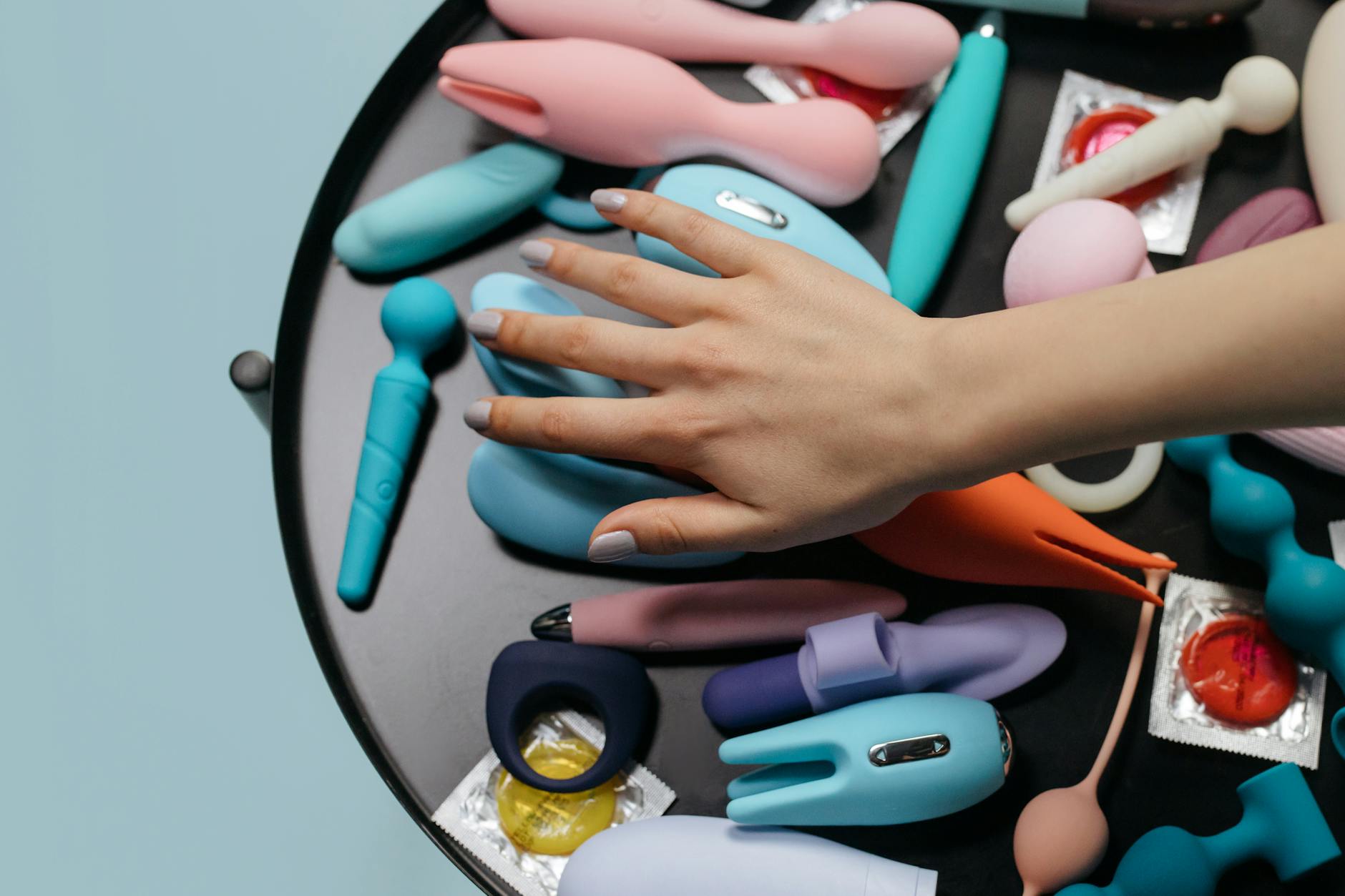
Let's name what's actually happening
You spent years, maybe decades, sharing pleasure with a partner. Your body learned to respond to someone else's rhythm, someone else's preferences, someone else's timeline. Now you're starting over, alone, and your body feels like a foreign country.
That's not broken. That's just unfamiliar. And there's a real difference.
Why solo pleasure feels different after partnership
When you're with a partner, pleasure is partly collaborative. You're tuned into their feedback, their speed, their comfort. You build a sexual rhythm together that's often more about synchronization than exploration. For years, that feedback loop was external.
Now it's just you. And that sounds simple until you sit down alone and realize: what do I actually want? Not what works for us. What works for me?
This isn't a small shift. Studies on post-breakup sexuality show that people relearning solo pleasure often spend the first three to six months feeling disconnected from their body's signals. The arousal pathway feels muted. The orgasm, when it comes, feels different. Your clitoris might seem less responsive than it did when someone else was involved.
Here's the truth: it's not less responsive. Your nervous system is just in a different state. With a partner, there's external stimulation creating excitement. Alone, you have to generate all of it yourself. That's not easier. It's actually harder at first.
What a lemon clitoral vibrator changes
A lemon sucker or lemon clitoral vibrator works for post-partnership solo pleasure because it bridges two gaps at once.
First, it gives your body external input. You're no longer generating all the stimulation through fantasy or mental effort alone. The vibrator is doing part of the work, which means your nervous system can actually focus on sensation instead of performing.
Second, lemon vibrators offer something a partner can't: perfect consistency. No fatigue. No rhythm changes. No speed variation based on their comfort. Just pure, reliable stimulation. For someone relearning their own body, that consistency is grounding. It teaches you what your baseline is without the variables.
The lem vibrator uses air-suction technology, which means it doesn't numb the area the way traditional vibration can. You're still feeling your own tissue and nerve response. You're just being supported by the device, not replaced by it.
Three phases of rebuilding solo pleasure
Phase One: Permission (Week 1-2)
The hardest part of starting solo isn't the mechanics. It's the permission. Many people who've been in long-term partnerships internalized a sense that their pleasure should be directed outward, toward a partner, or justified by partnership. Solo pleasure can feel selfish, wasteful, or pointless.
It's none of those things. Your pleasure matters independent of anyone else's. Full stop.
Start here: give yourself a 15-minute block with zero agenda. Not to achieve an orgasm. Not to prove anything. Just to notice what your body wants. No vibrator yet. No pressure. This phase is about rebuilding the connection between your mind and your body.
Phase Two: Reintroduction (Week 3-6)
Now bring in a lemon vibrator. Start at the lowest setting. The goal is not orgasm. The goal is sensation mapping. Where does the stimulation feel good? Where does it feel overwhelming? What speed makes you want to lean in, and what speed makes you want to pull away?
Many people rediscovering solo pleasure use their vibrator in the same aggressive way they used it with a partner. They jump to intensity level 5 because that's what felt good before. Then they feel numb. Then they assume they're broken.
You're not broken. You're just reintroducing yourself. Spend at least two sessions at each intensity level. Let your body remember how to warm up.
Phase Three: Integration (Week 7+)
Once you know what your body wants at different speeds, you can start exploring how pleasure actually unfolds for you alone. Some people find that solo orgasms are faster. Some find they take longer. Some find they're less intense. Some find they're deeper and more full-body than partnered sex ever was.
There's no wrong answer. You're collecting data about yourself.
The emotional layers nobody warns you about
When you're rebuilding solo pleasure after a long partnership, you're not just relearning physical sensation. You're untangling identity.
For years, you were "the person in a relationship." Your sexuality was framed around coupledom. Now you're solo, and there's often a voice saying: who am I sexually if I'm alone? Is this still meaningful?
Yes. More than that, solo pleasure is where you actually find out who you are sexually, separate from partnership dynamics or compromise.
Some people discover that what they want alone is completely different from what they wanted in the relationship. That's not a surprise. That's information. Use it.
If grief shows up during this process, that's normal too. You might feel pleasure and then suddenly feel sad. Pleasure and then lonely. That's your nervous system processing multiple things at once. The sadness doesn't invalidate the pleasure. They can coexist.
Practical setup for rebuilding
You don't need a complicated routine. Here's what works:
Carve out a regular time. Not when you're exhausted. Not when you have one eye on your phone. 20 to 30 minutes, ideally the same time each week, where you're not going to interrupt yourself. Your nervous system learns that this is a safe container.
Use lube, even if you think you don't need it. After years of partnered sex, your body's natural lubrication might be less predictable solo. Water-based lube (essential with silicone lemon vibrators) reduces friction and makes the experience less effortful.
Start with your hands before you introduce the lemon clitoral vibrator. Spend five minutes just touching yourself, noticing temperature, texture, where sensation is dulled and where it's sharp. This teaches your brain to pay attention.
When you bring in the vibrator, start on a pattern, not an intensity. Most lemon sexual toys have different patterns that cycle through various rhythms. Patterns often feel less aggressive than straight vibration, and they keep your nervous system slightly engaged (you're anticipating the next rhythm change instead of zoning out).
When to seek support
If you're three months in and there's complete numbness, that's worth discussing with a doctor. Sometimes numbness is just nervous system downregulation from grief or stress. Sometimes it's something else. You deserve to know.
If you're finding that solo pleasure brings up trauma or sharp emotional pain, a therapist who specializes in sexual health can help you untangle that. You shouldn't have to white-knuckle your way through it alone.
And if you're simply not interested in solo pleasure right now, that's fine too. This isn't a mandate. It's an option. Some people need a full year before they want to explore solo pleasure again. Others need a few weeks. Both are normal.
The long view
Rediscovering solo pleasure after a long partnership isn't about replacing partnership. It's about knowing yourself as a standalone person with your own desires, your own body, your own capacity for pleasure.
That knowledge becomes the foundation for future relationships. You know what you actually want instead of what you think you should want. You know what your body feels like when it's satisfied. You know that your pleasure is valid independent of anyone else's.
A lemon vibrator like the lem is just a tool. But it's a tool that says: your pleasure matters enough to invest in. Your body is worth understanding. You're worth the time.
Start small. Be patient with yourself. Your body will remember how to feel good. It just needs permission and a little support.
People Also Ask
How long does it take to feel aroused again after a breakup?
Every nervous system is different, but most people report that basic arousal returns within 4 to 8 weeks of intentional solo exploration. The first two weeks are usually the hardest because your body is still in partnership mode. By week three or four, arousal typically becomes easier to access. If you're hitting three months with zero arousal, that's worth discussing with a healthcare provider. Grief, stress, hormonal changes, or medication can all dampen arousal independent of the breakup itself.
Can a lemon sucker help if I feel numb during solo pleasure?
Yes, but with caveats. Air-suction vibrators like the lem work differently than traditional vibration because they use gentle pulsing rather than direct buzzing. This can actually help with numbness because you're not over-stimulating nerve endings into temporary paralysis. Start at low intensity and give your body time to wake up. If numbness persists after two to three weeks, paired with fatigue or mood changes, check in with a doctor.
Is it normal to feel sad while using a lemon clitoral vibrator after breaking up?
Completely normal. You're accessing pleasure, which involves activation of your nervous system. At the same time, you're doing something you used to do with a partner, and that loss is real. Sadness and pleasure can happen in the same moment. It doesn't mean you're broken or that you shouldn't keep going. It means your system is processing grief and sensation at the same time. This usually softens after a few weeks as your body adapts to the new normal.
Should I wait before starting solo pleasure after a breakup?
Not necessarily. Some people feel ready after a few days. Others need six months. The only guideline is: if you're exploring solo pleasure as a way to numb pain or escape processing the breakup, that's avoidance. If you're exploring it as curiosity about your own body, that's healthy. The motivation matters more than the timeline. There's no rule that says you have to wait, and there's no rule that says you should rush.
Why does orgasm feel different when I'm alone versus with a partner?
Because the context is totally different. With a partner, you have external stimulation, feedback, anticipation of their response. Alone, you have just your own nervous system and your own attention. Solo orgasms are often more internally focused and can feel less intense or more intense depending on your mental state. If you're distracted or anxious, solo orgasms feel muted. If you're fully present, they can feel profound. This is just variation, not dysfunction.
Can lemon vibrators help me rebuild confidence in my sexuality?
Yes, if you use them that way. When you learn what your body actually wants and what makes you feel good, that's information. Confidence comes from knowing. Solo exploration with a tool like a lemon clitoral vibrator teaches you about your own pleasure in a low-pressure way. You're not performing for anyone. You're just learning. That foundation often translates into more confidence in future partnered experiences too.
Moving forward
Rebuild at your own pace. Use lemon sexual toys if they feel right, or skip them if they don't. The goal isn't to achieve anything. The goal is to reconnect with the part of you that exists independently of partnership. That part is still there. It's just been quiet for a while. Give it time, space, and permission to wake up.