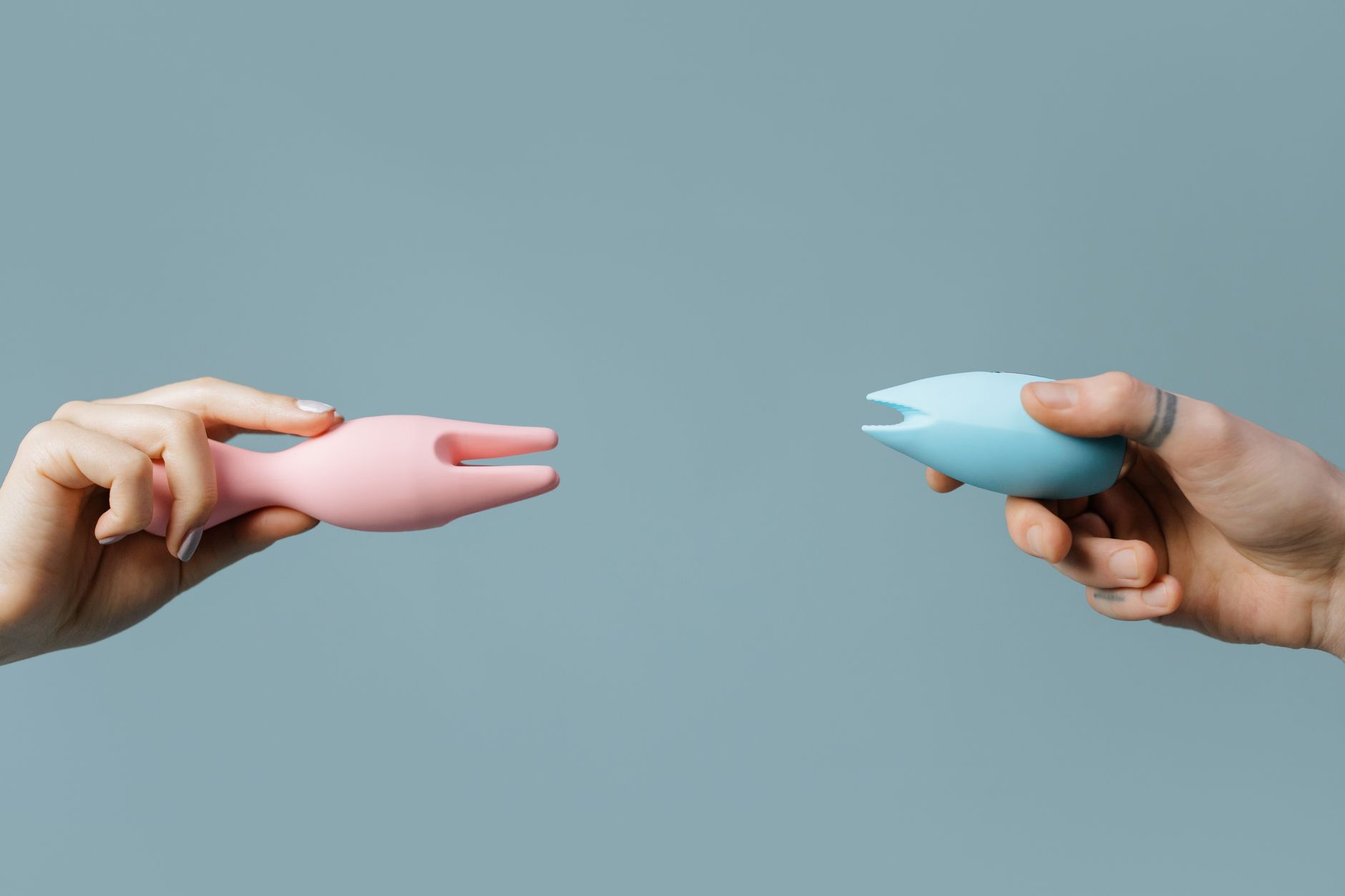
Let's talk about what hormones actually do to pleasure
Here's the thing nobody explains clearly: hormonal shifts don't kill your capacity for orgasm. They change the pathway to get there. Your clitoris doesn't stop responding. It just needs a different kind of touch.
When estrogen levels drop, the tissue around your clitoris becomes thinner and more sensitive. This sounds like it should be a good thing, right? Except that increased sensitivity can also mean increased irritation. Direct vibration that felt perfect at 25 can feel too intense, too sharp, too raw at 45 or beyond. That's not dysfunction. That's just biology asking you to try something different.
Why air-suction technology matters more now
Lemon clitoral vibrators and other air-suction devices work through a completely different mechanism than traditional vibrators. Instead of direct contact vibration, they create gentle suction and pulse around the clitoris, stimulating the nerve endings without the same mechanical friction.
After hormonal shifts, this matters for three specific reasons.
First, the sensation is distributed differently. A traditional vibrator concentrates pressure on one small area. Air-suction spreads stimulation in a gentler, wider pattern. For tissue that's become more delicate, this feels less like hammering and more like something that respects what's actually happening in your body.
Second, you have more control without desensitization. Because suction doesn't numb tissue the way direct vibration can, you maintain sensitivity throughout. This is huge. Many people find they can have multiple orgasms with a lemon clitoral vibrator precisely because they're not rubbing sensation away.
Third, the warm-up period matters less. Traditional vibrators often require a long lead time post-hormonal shift because tissue needs to be highly aroused before it can handle sustained friction. Lemon vibrators can work effectively even when arousal is building more slowly, which aligns with how your body actually works now.
The physical changes to understand
When estrogen drops, several things shift simultaneously. The vaginal tissue thins, yes, but also the clitoral hood (the skin covering your clitoris) becomes less cushioned. The clitoral glans itself doesn't change, but it's less protected. This is why direct vibration can feel almost sharp instead of pleasant.
At the same time, blood flow to the genitals changes. Arousal takes longer to build, and the intensity of swelling during arousal is different. Your body still knows how to orgasm. The time and touch required to get there have just shifted.
This is also why the lemon sucker approach works well. The gentle suction mimics the sensation of oral sex but with adjustable intensity. You control the pattern and strength. That agency matters, especially when you're learning your new body.
How to actually use a lemon clitoral vibrator after hormonal changes
Start lower than you think you need to. If your device has five settings, begin on setting one or two. The goal isn't to jump to the strongest setting as fast as possible. It's to understand what your body responds to right now.
Many people are surprised to find that lower settings feel better post-hormonal shift. Not weaker or less satisfying, just better. There's a difference. You might climax in the same timeframe on setting two as you used to need setting four.
Build in a longer exploration phase. Give yourself 15 to 25 minutes before you're trying for an orgasm. Some of that time should be without the toy, just touching yourself and checking in with what feels good. Your hands are still your best diagnostic tool.
Lubrication is not optional, even if you're producing adequate natural lubrication. Water-based lube on the outside of the toy, where it touches you, creates a buffer and makes everything feel less intense. This is particularly true if you're using any hormone therapy or other medications that affect moisture.
Play with positioning. The angle at which you hold a lemon vibrator changes what you feel. Slight adjustments can make a huge difference. Spend time finding the angle that feels right for your body specifically, not for someone else's body.
The emotional piece nobody talks about
Here's where it gets real. Using a lemon clitoral vibrator or any new technique after hormonal changes isn't just about mechanics. It's also about grief and adaptation.
You're learning your body again. That can feel exciting. It can also feel frustrating, especially if you spent decades getting really good at knowing what worked. Some of that skill still applies. Some of it doesn't. That's normal and it's okay.
If you're partnered, the conversation matters more than the toy. "I'm experimenting with what feels good now" is fundamentally different from "something's wrong with me." One of those opens the door to exploration together. The other closes it.
Many people report that their best orgasms come after hormonal shifts, but only after they've given themselves permission to relearn pleasure without comparison to what came before. A lemon vibrator or similar device can be part of that permission, but it's not the whole story.
When to see someone if pleasure changes aren't just about hormones
If direct pain accompanies pleasure, that's worth checking with a healthcare provider. Genitourinary syndrome of menopause (GSM) is real and treatable, often with topical therapies that work quickly.
If desire has completely disappeared and isn't returning after a few weeks of exploration, that might point to something besides hormones. Medication side effects, relationship stress, other health conditions, depression, all of these can look like hormonal change from the outside but need different treatment.
If you're using a lemon vibrator or other clitoral vibrator and experiencing irritation or rawness, that's also worth mentioning. It might just mean you need more lubrication, longer warm-up, or a lower setting. It could also mean there's something else happening that deserves attention.
The big picture
Hormonal shifts change your body, including how pleasure works. That's not a tragedy. It's an invitation to pay attention in a way you might not have before. Using lemon clitoral vibrators when sensation feels unpredictable and inconsistent is one practical strategy. Checking in with what feels good in your body is another.
Your capacity for pleasure doesn't end. It evolves. And often, the most interesting evolution is still ahead of you.
FAQ: Common questions about lemon vibrators and hormonal changes
Why does my lemon vibrator feel different than it used to?
Your sensitivity has shifted along with your hormones. The same device stimulates different nerve endings at different intensities now. What felt perfect might feel too strong, or what felt too gentle might be exactly right. This is normal. Most people adjust their technique, their settings, or their warm-up time and find they love their device again, just differently.
Can I switch to a lemon clitoral vibrator if I've always used traditional vibrators?
Absolutely. Many people find air-suction devices like lemon vibrators feel less intense and more nuanced than traditional vibrators. If direct vibration has started to feel irritating or numbing, the lemon sucker approach might feel like a relief. It's worth trying even if you've never considered it before.
How long does it take to adjust to a new device after hormonal shifts?
Most people report noticing a difference within three to five uses. Full comfort and confidence usually takes a couple of weeks. Give yourself that time. You're not broken. You're just learning a new language your body is speaking.
Is lube necessary with a lemon vibrator?
Yes, even if natural lubrication feels adequate. Lube creates a gentler interface between the toy and your tissue. It also makes everything feel less intense, which is often exactly what you need post-hormonal shift. Water-based lube works best with most toys and washes off easily.
Can hormonal medications affect how toys feel?
Absolutely. Hormone therapy, antidepressants, blood pressure medication, and many other drugs can change tissue moisture, blood flow, and sensitivity. If you've started any new medication and pleasure feels different, it's worth asking your provider about it. Sometimes timing helps. Sometimes switching medications helps. Sometimes adjusting your approach to pleasure is the right answer.
Should I be concerned if an orgasm feels different than before?
Not necessarily. After hormonal shifts, orgasms often feel more localized, or less intense, or more concentrated. Some people report feeling them differently in their body. Others find they're stronger but shorter. None of these are problems. They're just different. The goal is pleasure, not replicating the exact sensation you had before.
Final thoughts
Your body is still capable of pleasure. It's just asking you to pay attention in a slightly different way. Learning how to use lemon vibrators when you want stronger orgasms but have reduced clitoral sensitivity is one practical framework. The bigger point is that hormonal change is not the end of anything. It's a shift. And shifts can be interesting if you're willing to explore them.