Let's be real about the awkwardness first
Most couples don't talk about bringing a vibrator into partnered sex because it feels loaded. You worry it means your partner isn't enough. They worry it means they're doing something wrong. Neither is true, but the silence sits there anyway. A lemon clitoral vibrator is not a replacement for your partner. It's a tool that often makes partnered sex feel better for both of you.
The research backs this up. Couples who use vibrators together report higher satisfaction, more consistent orgasms, and frankly, less resentment. That last part matters more than people admit. When someone's struggling to orgasm, the performance pressure builds on both sides. A vibrator removes the pressure and restores the pleasure.
Why the conversation matters more than the device
Here's what I see most often in my practice. One partner wants to introduce a lemon vibrator and tries to surprise their partner with it mid-sex. That rarely goes well. The surprised partner feels blindsided, wonders what it means, and the whole thing becomes defensive instead of connective.
Start with a conversation when you're both clothed, calm, and not in the bedroom. Say something like, "I've been thinking about how I want to feel more during sex with you. I read that couples often use vibrators together, and I'm curious if you'd be open to trying one." Notice the framing. You're not saying you're not satisfied. You're saying you want to go deeper into satisfaction.
If your partner has concerns, listen. Common ones are that it'll hurt their ego, that you'll become "addicted" to it, or that it means you don't want them anymore. None of these hold up to reality. But you can't logic someone past a feeling. Ask what would help them feel more secure. Sometimes it's using it together the first time. Sometimes it's watching you explain why you want to try it. Sometimes it's trying it themselves first to see what the fuss is about.
Choosing the right lemon vibrator for partnered play
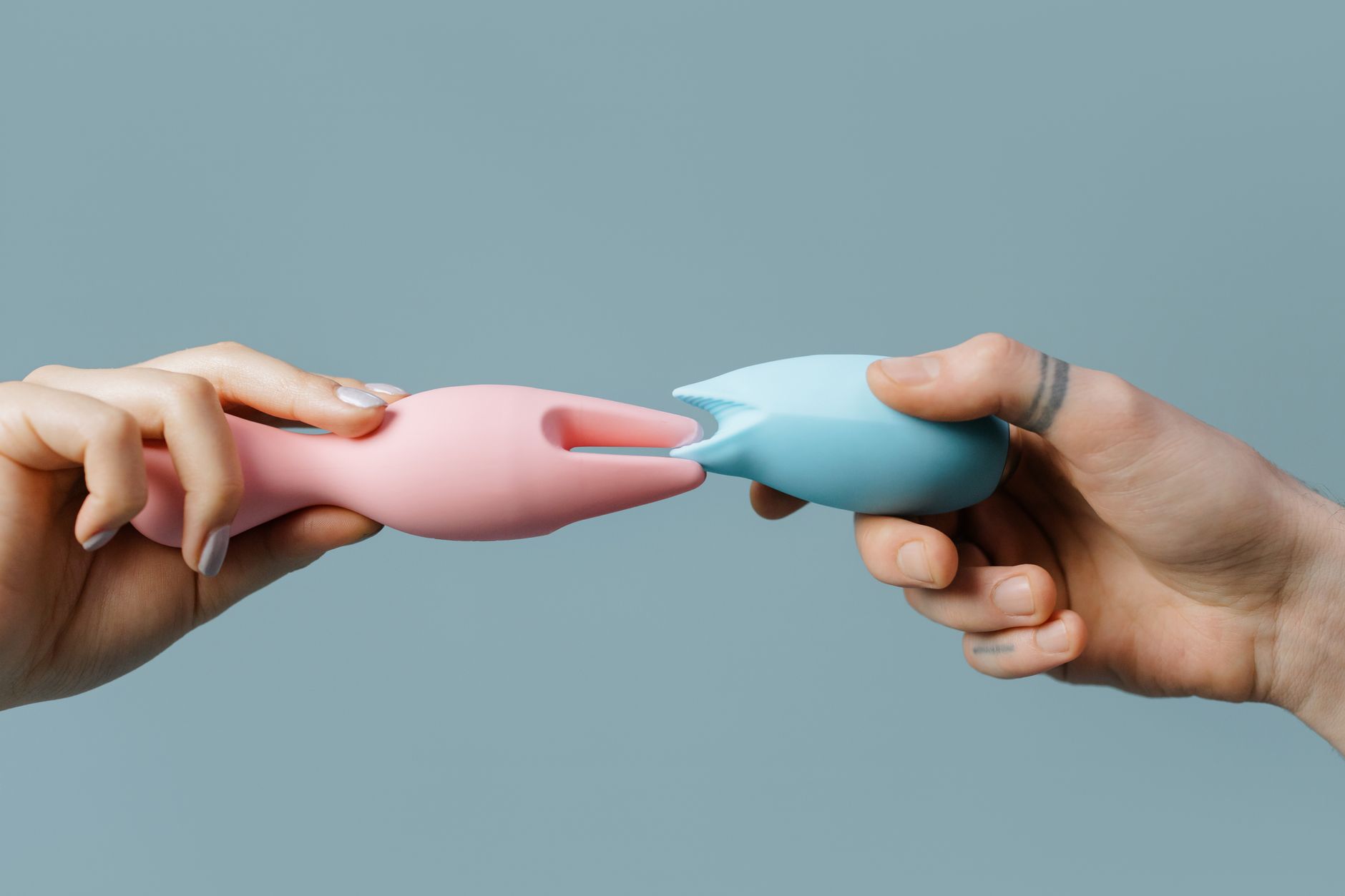
Not all lemon sexual toys work equally well with another person in the bed. You want something compact, quiet, and easy to control mid-motion. A full-sized wand works great solo but gets awkward with another body there. A suction-style lemon clitoral vibrator like the Lem is ideal because it's designed to create sensation without requiring you to hold it in place yourself, which frees both partners to move and touch.
Think about what sensations you actually want. Some people want something they can use hands-free or nearly hands-free, so they have full access to their partner. Others want to hold it themselves and control the intensity precisely. If you're unsure, start with something versatile and mid-sized.
One practical note. Lemon vibrators with multiple patterns are worth the investment for partnered play. You'll want to adjust intensity or switch patterns based on how your partner's rhythm is hitting, and cycling through options keeps it from feeling repetitive.
The first time. How to actually do this.
Don't make it a big performance. You're not introducing a third element into a sacred ritual. You're just adding a tool to something you already do together. Start with foreplay like you normally would. Build arousal the way you usually do. When you're both ready to move toward penetration or deeper stimulation, introduce the vibrator.
Here's the approach that works. "Can I try using this now?" That's it. Not a grand gesture, not a question about whether they're comfortable with it. Just a simple present-tense proposal. If they say no, don't push it. If they say yes, show them the basics. "I'm going to control it, so just let me know if you want me to adjust it." Or "I think I want to hold it during this part, but tell me if it doesn't feel good."
Start at a lower intensity. This matters. People assume vibrators should be at full power, but lower patterns often create more nuance and pleasure. Try patterns one through three. Pay attention to your own body. Where does the sensation feel best. Does it work better on the left, right, or center. If you're with a partner inside you, how does the vibration feel to them.
One thing that surprises couples. Sometimes your partner can feel the vibration more than you can, even though you're holding it. That's fine. That's actually connection happening in real time.
Patterns and timing that actually work
Most lemon clitoral vibrators have between five and ten patterns. The repetitive ones feel good for building toward orgasm, but they get boring fast when you're with someone. The pulsing or wave patterns often feel more dynamic and less numbing.
Here's what I recommend. Start with a steady low pulse for a few minutes while you're still in foreplay. Let your body adjust and your partner adjust to having it there. Then move to a pattern that feels rhythmic but not hypnotic. Something that ebbs and flows rather than just hammering one frequency.
Timing is everything. If you're using penetration too, rhythm it together. Some couples sync it with their thrusting. Others use the vibrator during slower, more intentional movement. There's no one way. The point is to pay attention. If you're both distracted or performing, the vibrator becomes a stage prop. If you're both present and adjusting based on what you feel, it becomes part of the connection.
Many people find that using a lemon sucker style vibrator right before the moment they usually orgasm changes everything. Instead of chasing the orgasm the way you normally do, you're arriving at it from a different angle. Orgasms can feel stronger or longer or just different enough to be interesting. Different is good when you've been with the same person for a while.
Removing the performance pressure
This is the actual magic. When you introduce a vibrator into partnered sex, you're removing the pressure that your partner's body alone has to create the exact sensations your body needs. That pressure isn't always visible, but it's there. Your partner feels it. You feel it. You're both working.
With a vibrator, your partner can focus on connection, motion, and their own pleasure instead of wondering if they're hitting the right spot or moving at the right pace. This is especially helpful if you have difficulty orgasming, if your pleasure is inconsistent, or if you've been faking it. A lemon clitoral vibrator gives your body permission to feel what it actually feels instead of perform what it should feel.
Talk about it after. Not in a clinical way. Not a debrief. Just a simple moment. "That felt really good." Or "I liked when you..." This normalizes it. It becomes part of your sexual repertoire instead of a special occasion tool. After a few times, it just is. Your partner doesn't worry it means anything besides what you said. They trust it.
Troubleshooting what comes up
Sometimes a partner worries that if you use a vibrator, you'll need it every time. You won't. Lemon sexual toys are best used as one option among many, not as a requirement. Some sessions you'll use it. Some you won't. That's fine.
Sometimes it feels weird because it buzzes against your partner's genitals too. That's normal. They might find it pleasant, or they might find it distracting. If it's distracting, angle it differently or use it only during certain parts of partnered sex. You can use it during your own stimulation while they're inside you and aren't making contact with the vibrator. You have options.
If you've been with the same partner for years and adding a vibrator feels awkward because it introduces novelty into something that's become rote, that awkwardness is actually good. Rote is the enemy of desire. A small change wakes both partners up. It reminds you that this is something you're choosing to do together, not something that just happens on autopilot.
When to use it and when to skip it
You don't need a lemon clitoral vibrator every single time. That defeats the point. Use it when you want it. When you're feeling disconnected from your body. When you want a different kind of sensation. When your partner is stressed and you want to take some of the pressure off. When you're both curious about what changes.
Skip it when you don't want it. When you're having a really connected session without it. When you're in a hurry. When you're in a location where the noise matters. You're in charge. Your pleasure is not a fixed thing that requires the same tools every time.
That said, a lemon vibrator often unlocks something for couples. Sometimes it's better orgasms. Sometimes it's permission to slow down. Sometimes it's a conversation starter about what you actually want from each other sexually, which is never a bad thing. You might use it a few times and then not reach for it again. You might use it regularly. Either way, you've expanded the possibilities. That matters more than the device itself.
FAQ
Will using a lemon clitoral vibrator make partnered sex feel less intimate?
No. Research consistently shows the opposite. Couples who use vibrators together report deeper connection and more satisfaction. The vibrator removes performance pressure, which actually creates space for genuine connection. You're not replacing your partner. You're enhancing what you already do together.
Can my partner use the lemon vibrator on me, or do I have to use it myself?
Both work. Some couples prefer one person holding and controlling it. Others like switching. Some like the receiving partner to guide their partner's hand where they want the sensation. This is something you figure out together through experimentation, not something you have to decide beforehand.
How often should we use a lemon sucker vibrator during partnered sex?
There's no should here. Use it as often as you want it. Some couples use it most sessions. Others use it occasionally. Some people find they use it a lot initially and then less frequently as they adjust. The point is that it's available when you want it, not a requirement.
What if my partner feels insecure that I need a vibrator to orgasm with them?
This is the conversation worth having. The truth is usually this. You don't need the vibrator because your partner isn't enough. You want it because your body works this way and you deserve pleasure. Their insecurity is normal but not true. Couples who can talk through this usually come out stronger on the other side. Sometimes your partner feels better once they try the vibrator themselves or once they see how connected you feel using it together.
Is there a lemon vibrator that's best for partnered play specifically?
Lemon clitoral vibrators that are smaller, quieter, and have multiple patterns work best with another person. You want something compact enough that both bodies fit comfortably in the bed and something with options so you can adjust based on what you're doing. Something hands-free or nearly hands-free often works better because it leaves your hands free to touch your partner.
How do I know if my partner actually wants to try this or is just doing it for me?
Ask. Not in the moment, but in a calm conversation. "Are you genuinely interested in trying this, or are you doing it because I want to?" If they're doing it just for you, that's okay as a one-time thing, but it's not sustainable. Real pleasure is reciprocal. If they're curious but nervous, that's different. That's something you can work with together. If they're a hard no, that's information too.
The real payoff
Couples who bring lemon vibrators into partnered sex usually report the same thing afterward. It wasn't about the device. It was about deciding together that pleasure matters. It was about one person saying, "I want this for us," and the other person saying yes. It was about removing the assumption that one body should be enough for another body and asking instead, "What do we both want." That conversation changes things. The vibrator just makes it easier to have.
If you're thinking about introducing a lemon clitoral vibrator into your partnered sex life and feeling uncertain, that hesitation is normal. It's worth moving through. Your pleasure matters. Your partner's pleasure matters. And the connection you build by exploring together, even when it feels awkward at first, that matters most of all.
For more on building intimacy with your partner, check out our guide on how to rebuild physical intimacy after extended time apart. If you're also navigating pleasure after hormonal changes, we've got a deep dive on why lemon clitoral vibrators work better after hormonal shifts. And if you want to explore what patterns work best for your body first, our post on how to use lemon vibrators when you want pleasure without numbness or desensitization is a good starting point.
Questions about how lemon vibrators fit into your specific situation? We're here to help. Get in touch.