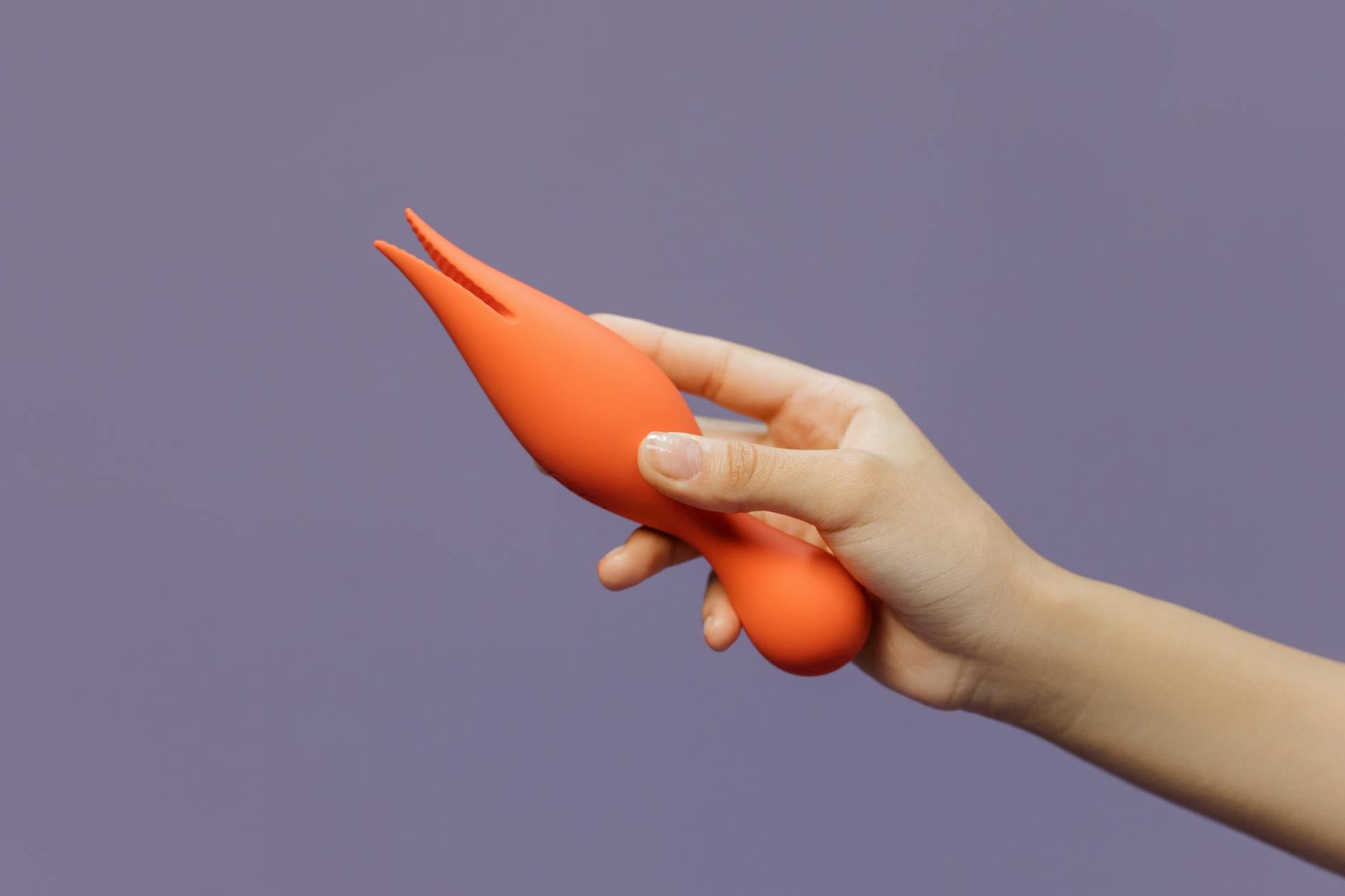
Let's talk about the body you're not feeling
Disconnection from your body is not a character flaw or something you caused. It's a protective response your nervous system learned for good reason. Stress, trauma, burnout, relationship shifts, medication, hormonal changes, grief.any of these can flip a switch that says "safe to feel" to "nope, not now." And then you're left trying to experience pleasure in a body that feels like it belongs to someone else.
The weird part? Knowing what you're supposed to feel doesn't help. You can read about orgasms, understand the anatomy, want it badly, and still find yourself lying there thinking about your grocery list.
Why standard vibrators don't always work for disconnection
Most vibrators rely on direct, repetitive contact with the clitoris. When you're disconnected, that intensity can feel like pressure on anesthesia. You're not numb to touch. You're numb to meaning. The signal arrives but your brain doesn't translate it into sensation. Ramping up the speed usually backfires. Your nervous system just locks down harder.
This is where the design of air-suction technology matters. Instead of grinding frequency, suction creates a gentler, pulsing sensation that stimulates the tissue without requiring direct nerve activation through friction. Think of it like the difference between poking someone to wake them up versus gently nudging them. One creates resistance. The other invites attention.
How lemon clitoral vibrators rebuild the connection
Lemon vibrators use rhythmic suction that creates micro-sensations without overwhelming the nervous system. Here's what changes:
Your attention gets invited back. Suction feels different enough from touch that it bypasses the habitual "ignore this" response. You notice it. That noticing is the first step.
The sensation is diffuse, not concentrated. Air-suction spreads stimulation across the entire clitoral complex, not just the glans. This creates a broader field of sensation that your brain can actually process when you're disconnected.
It's easier to stay present. Because the sensation is gentler and more rhythmic, you don't need to brace against it. Your nervous system doesn't have to defend. That's when presence becomes possible.
The practical setup for reconnection
Environment matters more than you'd think when you're working with disconnection. Your nervous system needs to feel genuinely safe, not just logically safe.
Start with a space where interruption is actually impossible. Lock the door. Tell your partner you're unavailable for 45 minutes. Put your phone in another room. Your brain is already skeptical; it doesn't need extra vigilance.
Warmth helps. A bathrobe, a blanket nearby, warm tea first. Cold rooms keep you in your head. Warmth allows you to settle into your body.
Timing matters too. Don't schedule this right after work stress or conflict. Late afternoon or early morning often works better than evening, when you're already mentally exhausted.
Starting with lemon sexual toys: the first session
Don't approach this like you're trying to have an orgasm. That goal will backfire spectacularly when you're disconnected. Instead, frame this as getting to know a new sensation.
Charge your lemon vibrator fully beforehand. Start on the lowest setting. Patterns 1 or 2, depending on your device. Hold it against your clitoris for 30 seconds, then release. Notice what you feel. Not what you're supposed to feel. What actually arrives in your awareness.
It might feel like nothing. That's data, not failure. It might feel like pressure. Also data. You're rebuilding the communication line between your body and your brain. That takes sessions, not minutes.
If you feel even a small flicker of sensation, stay there. Don't chase it with more intensity. Let your nervous system recognize the signal as safe.
Sessions two through five look similar. Same environment. Same lowest settings. Same goal: noticing, not orgasming. This is genuinely how reconnection works.
When you start to feel something
Around session four or five, most people report that the sensation becomes clearer. It's not necessarily pleasure yet. It might be a light tingling, a gentle warmth, a subtle pulse you can actually track.
That's the moment everything shifts. Your nervous system is starting to trust that this input is safe.
Now you can experiment slightly. Try pattern 3. Try holding it a bit longer. Try moving it fractionally. You're still not chasing orgasm. You're building the capacity to feel.
Many people find that when they stop white-knuckling it and just let sensation exist without judgment, pleasure arrives on its own. Not instantly. But within a week or two of regular, low-pressure sessions.
The role of your mind
Your thoughts during these sessions matter. Intrusive thoughts are normal. Your brain's job is to think. But when you notice yourself narrating ("Am I doing this right?" "Why doesn't this feel like porn?" "I should be more turned on"), gently redirect to sensation.
What does the suction feel like right now? Cool? Rhythmic? Is there any change in your breathing? Any slight warmth? Any relaxation in your shoulders? These micro-observations keep your brain anchored in your body.
If disconnection is rooted in past trauma, this process might feel harder. Consider working with a therapist alongside this. Reconnection can bring up feelings. Having professional support makes that safer.
Using lemon vibrators with a partner
If you have a partner, they don't need to be in the room initially. This is your process. Your body. Your timeline.
When you're ready to reintegrate pleasure with your partner, start by just showing them the device. No performance. No pressure. Just "I'm learning to feel again, and this helps. I'd like you to know about it."
Their job is not to create arousal. Their job is to hold space while you practice presence in your own body. That might mean they're in the room reading while you use your lemon vibrator. Presence without expectation.
Many couples find that when one partner rebuilds their own sensation, the entire dynamic shifts. Suddenly sex is about connection instead of performance.
Lemon adult toys and the patience piece
Rebuilding disconnection takes longer than most people want it to. You might want it to happen in one session. It usually takes weeks or months of consistent, low-pressure practice.
That's not a bug. That's actually how nervous system healing works. Quick fixes usually don't stick because your body is still defending. Slow, gentle, repeated safety signals teach your nervous system that it's actually okay to feel.
Most people find that after two to three months of regular use of air-suction lemon vibrators, sensation becomes noticeably sharper. Pleasure feels real again, not imagined or performed.
Then you get to decide what you do with that. Some people find that reconnection is the whole goal. Others use it as a foundation for rebuilding intimacy with a partner. Both are completely valid.
FAQ
Can lemon vibrators help with dissociation during sex?
Yes, but with one important caveat. If dissociation is a symptom of trauma, the lemon clitoral vibrator is a tool, not a cure. The suction sensation can help anchor you in your body during the moment, but the underlying pattern usually needs therapy. That said, many people find that practicing presence with their device actually makes therapy more effective because they're building the neural pathways for staying present.
How long before I feel anything with a lemon sucker?
First session? Maybe nothing. Sessions two through five? Probably still subtle. Sessions six through ten? Most people report clear sensation. By week three of regular use, the difference is usually obvious. If you're not feeling anything by week four, that's worth discussing with a therapist, because it might indicate deeper dissociation that needs professional support.
Should I use my lemon vibrator with a partner watching?
Not if you're working on reconnection. That introduces performance pressure, which is exactly what your nervous system is defending against. Rebuild sensation alone first. Once you trust your own pleasure, bringing a partner in becomes easier because you're not depending on them to make it real.
What if I still can't feel anything after a month?
Talk to your doctor. Disconnection sometimes has medical roots. Hormonal changes, certain medications, neurological factors, and even nutritional deficiencies can affect sensation. It's worth ruling those out before assuming it's entirely psychological. Then work with a trauma-informed therapist if needed.
Can I use my lemon vibrator if I'm on antidepressants?
Often yes, but the timeline might be longer. Some antidepressants temporarily dull sensation as a side effect. That usually improves after your body adjusts. If sensation doesn't return after three months on your medication, ask your doctor about timing adjustments or switching medications. Reconnection is possible, but you might need professional support to figure out what's neurochemical versus what's psychological.
Is it normal for lemon clitoral vibrators to feel annoying at first?
Completely normal. Your body is learning a new sensation. Annoyed means you're noticing it, which is the goal. Annoyed will often shift to pleasant within a few sessions once your nervous system realizes it's safe.
Next steps
Reconnection isn't linear. Some days you'll feel more than others. That's not failure. That's how nervous systems work. The goal is gentle, consistent practice, not perfect progress.
If disconnection is tied to relationship issues, consider reading about how to rebuild physical intimacy after extended time apart. If anxiety is part of your pattern, using lemon vibrators when anxiety makes it hard to relax might help.
Your body's capacity to feel hasn't disappeared. It's just learned to protect you. The good news? That protection can be slowly, gently unlearned. Hal Loanancyslem's lemon vibrators give you the tool. Patience gives you the timeline. And time gives you back sensation, pleasure, and the kind of presence that makes sex actually feel like sex again.