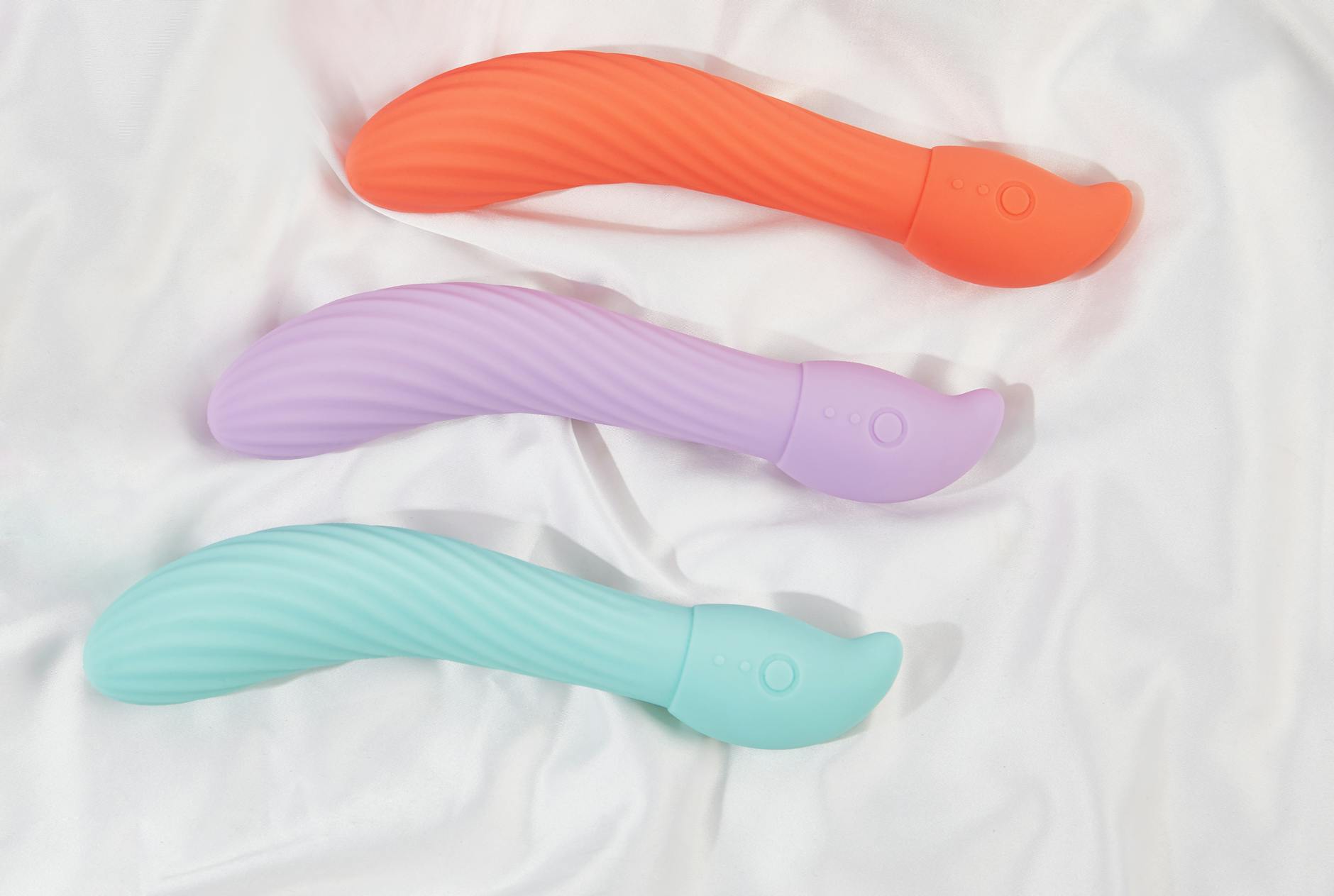
Here's what nobody tells you about post-menopause pleasure
Menopause doesn't end your sexual life. It transforms it. The estrogen drop, the tissue changes, the shift in how your body responds to touch. All real. But here's the part that gets buried in fine print: your clitoris still has 8,000 nerve endings. Your brain still floods with oxytocin during arousal. Your capacity for intense, deeply satisfying orgasms doesn't expire at 51.
What changes is how you get there. And once you know the map, the journey often becomes richer than it was before.
I've worked with hundreds of post-menopausal clients, and the ones who rebuild pleasure most successfully aren't the ones waiting for their bodies to go back to normal. They're the ones who learn what their bodies actually need now, and then give themselves permission to use it.
What happens to tissue after menopause ends
Once menopause is officially over (12 months without a period), your estrogen levels stabilize at their new, lower baseline. This is different from perimenopause, where hormones fluctuate wildly. Now they're just consistently low.
Lower estrogen means:
Vulval and vaginal tissue gets thinner. This isn't a medical problem. It's just tissue behavior. The epithelium becomes more fragile, less elastic, less prone to natural lubrication. For some people, this causes discomfort during penetration. For others, it barely registers.
The clitoral glans (the external tip) also thins slightly, which can make direct friction feel either too intense or less responsive, depending on your sensitivity baseline. This is where the design of lemon vibrators becomes relevant.
Pelvic floor muscles lose some of their estrogen-fueled support. They don't weaken, but they change. You might notice your orgasms feel more concentrated, or that you need a different angle to trigger them.
Blood flow to the genitals shifts. Arousal takes longer to build. You might need 15 to 25 minutes instead of five. That's not dysfunction. That's just the tempo of your body now.
Why lemon vibrators are particularly good for post-menopause bodies
A lemon clitoral vibrator uses suction and pulsing instead of rapid oscillation. This matters for post-menopausal tissue in three specific ways.
First, suction doesn't require direct friction. Your thinned tissue doesn't get irritated by repeated mechanical vibration. Instead, the gentle seal and pulse create stimulation through pressure change, which feels different and often gentler.
Second, the lemon design (or any clitoral suction toy) works beautifully with slower arousal builds. You can hold it at lower intensities (patterns 1 through 3) for longer warm-up periods without fatigue. Many clitoral vibrators feel intense no matter the speed. A lemon vibrator scales down gracefully.
Third, suction toys often trigger orgasms that feel more intense and sustained than what post-menopausal bodies experience with traditional vibrators. Multiple clients have told me their strongest orgasms came after they switched to a lemon sexual toy, even though arousal took longer to spark. Tissue change doesn't equal pleasure ceiling. It's a redirect.
The physical setup that actually works
Let's talk mechanics. Your post-menopause body needs four things to get the most from a lemon vibrator.
Lubrication is non-negotiable. I don't mean optional. I mean use it every time, no matter what. Even if you self-lubricate well, a water-based lube reduces friction against thinner tissue and makes the suction seal more comfortable. Hyaluronic acid or glycerin-based lubes feel richer and last longer than thin water-based formulas. Apply it to both the toy and your vulva.
Time for arousal is not foreplay. It's essential. Twenty minutes minimum. Start by touching yourself elsewhere: your breasts, your inner thighs, your stomach. Get your brain involved before you bring the toy in. This isn't a speed run. It's setup.
Start at the lowest intensity. A lemon vibrator usually has 5 to 10 pattern options. Begin at pattern 1 or 2. Your post-menopausal nerve endings are highly responsive once blood flow increases. You don't need maximum power. You need sensitivity.
Position matters more than it used to. Lying on your back with a small pillow under your hips gives you better access and less strain. Some people prefer side-lying. Find the angle that doesn't require you to grip your pelvic floor tight. Tension kills arousal.
The mental shift that changes everything
Here's what I see happen most often: someone comes to me saying their pleasure has dried up post-menopause. We talk through the physiology. We talk through lubrication and intensity settings. But the real turning point comes when I ask, "What are you avoiding?"
Often, they're grieving the way their body used to work. Or they're embarrassed about needing more time. Or they've internalized the idea that desire should happen fast and easy, and if it doesn't, something's broken.
Nothing's broken.
Post-menopause is the first time many people get to explore pleasure without the cognitive load of fertility, hormonal cycles, or societal performance pressure. The slower arousal isn't a bug. It's an opportunity. Your brain gets to lead. Your breath gets to settle. Your pleasure gets to unfold instead of spike.
The clients who get the best results are the ones who decide this phase of their body deserves curiosity, not apology.
When to add a partner into the equation
If you have a partner and you're introducing them to your lemon vibrator or to your post-menopause pleasure needs, the conversation matters as much as the toy.
Don't lead with "I need this because my body is broken." Lead with "My body has changed and I want to explore what feels good now." There's a massive difference. One is apology. One is agency.
Some partners worry that a toy means they're not enough. The data doesn't support this: people in couples where toys are used report higher satisfaction and more frequent sex, not less. But that belief often sits underneath the resistance, so naming it directly helps. "This isn't about replacing you. It's about me understanding my own pleasure better, which actually helps us."
You can also invite them to participate: holding the toy, exploring patterns together, building arousal as a pair. Some post-menopausal people find that partner involvement during the longer arousal window actually deepens connection, because the pace forces more communication and attunement.
When something feels off, check these first
Pain during use with a lemon vibrator is not normal and shouldn't be pushed through. If you feel sharp pain or stinging, stop.
Genitourinary syndrome of menopause (GSM) can show up as pain, burning, or rawness. This is treatable. A gynecologist can prescribe topical estrogen creams that work locally and have minimal systemic absorption. It takes 2 to 4 weeks but it transforms the experience.
If arousal still isn't building after 20 minutes, even with plenty of lube and low intensity, check your stress level. Cortisol genuinely suppresses arousal. A warm bath, breathwork, or moving your session to a time when you're less mentally loaded often fixes this.
If you're on antidepressants, certain medications dampen sensation. That's worth discussing with your prescriber. Sometimes a different SSRI or a dose adjustment helps. Sometimes adding a testosterone cream helps (yes, post-menopausal people benefit from testosterone therapy). Sometimes a lemon vibrator's suction simply works better for medication-numbed tissue than a traditional vibrator would.
FAQ: Post-Menopause Pleasure and Lemon Vibrators
How long after menopause officially ends should I wait before using a toy?
You don't need to wait. The moment menopause is officially over (12 months without a period), your body is stable at its new hormone baseline. If you want to explore pleasure with a lemon vibrator, there's no medical reason to delay. That said, if you're dealing with active pain or extreme dryness, it's worth a quick conversation with your gynecologist first. They can rule out GSM or other conditions and give you the green light.
Can you orgasm more easily with a lemon vibrator after menopause than with a traditional vibrator?
Many post-menopausal people report yes, but it varies. The suction design of lemon clitoral vibrators can trigger stronger, more sustained orgasms in some bodies because they don't rely on direct friction. But some people find they need a combination: a lemon vibrator for initial arousal, then something with more direct pressure for orgasm. Experiment. Your body will tell you what works.
Is it normal for arousal to take 20 minutes or longer after menopause?
Completely normal. Estrogen supports blood flow to the genitals. Lower estrogen means slower vasocongestion. This doesn't mean something is wrong with you or with your body's capacity for pleasure. It means your arousal window is longer. That's actually a benefit if you're willing to work with it, not against it.
Will using a lemon vibrator regularly help my tissue become more responsive over time?
Regular use does help, but not because the tissue "bounces back." Instead, consistent stimulation increases blood flow and nerve sensitivity over weeks and months. Many post-menopausal people report that after using a lemon clitoral vibrator 2 to 3 times per week for a month, arousal builds faster and orgasms feel stronger. The tissue stays the same; your body's responsiveness increases.
If I feel numb or disconnected during lemon vibrator use, what's actually happening?
Numbness usually points to one of three things: you're at too high an intensity and your nerves are fatiguing, you need more lubrication and the friction is creating numbness rather than sensation, or you're tense in your pelvic floor and cutting off blood flow. Try backing down the intensity by 2 or 3 levels, add more lube, and check whether your pelvic floor is gripping. If none of that helps, a conversation with your gynecologist rules out medication interactions or other factors.
Does using lemon vibrators after menopause actually improve intimacy with a partner, or is that just something people say?
It depends on how you approach it. If you use a lemon vibrator to reconnect with your own pleasure and then bring that knowledge into partnered sex, the research and my own clinical experience show intimacy usually deepens. You're more confident, you know what you want, and you can guide your partner more clearly. But the toy itself isn't a relationship fix. The improvement comes from your willingness to prioritize your own pleasure and communicate that to your partner.
The post-menopause pleasure you deserve
Your body changed. That's real. But the narrative that menopause marks the end of your sexual life is a lie, and it's one I see people internalize without question.
Your clitoris is still there. Your capacity for pleasure is still there. Your right to explore what feels good is still there. The tools and timelines just shifted.
A lemon vibrator isn't magic. It's a tool designed for how post-menopausal bodies actually work: slower to arouse, responsive to suction, deserving of pleasure on their own terms.
If you're curious about exploring this more deeply, how lemon vibrators help when arousal takes longer to build after 60 covers the science in even more detail. And if you're navigating this transition with a partner, how lemon vibrators help when you feel disconnected from pleasure with your partner might resonate.
Your pleasure matters. Your body deserves attention. And the best orgasms of your life might actually be waiting on the other side of this transition.
If you have questions about which Hello Nancy product might work best for your post-menopause body, or if you want to talk through any concerns about pleasure and tissue changes, reach out. We're here to help.
References and Sources
Doctors and researchers who specialize in genitourinary syndrome of menopause (GSM) and post-menopause sexuality:
- The International Society for the Study of Women's Sexual Health (ISSWSH) provides evidence-based guidelines on post-menopause sexual health
- Vaginal health after menopause is well-documented in The American College of Obstetricians and Gynecologists (ACOG) guidelines
- Clitoral anatomy and nerve density research: O'Connell et al., Journal of Urology (2005), establishing the baseline nerve structure of the clitoris
- Suction stimulation and clitoral response: Studies in the Journal of Sexual Medicine on air-pulse technology and its effects on orgasm intensity
- Post-menopause arousal timelines: Research from the North American Menopause Society (NAMS) on normal physiological changes in sexual response