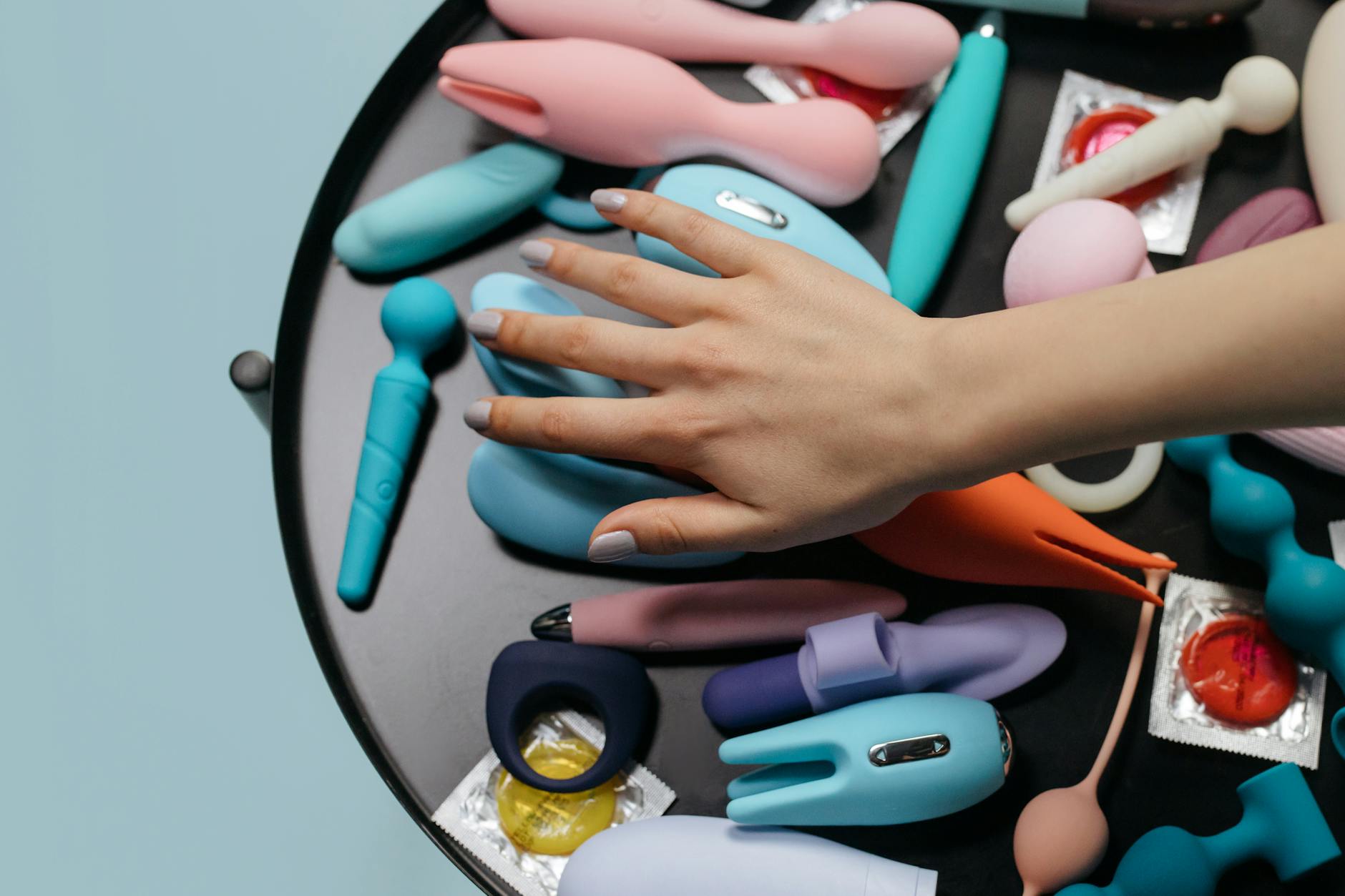
Lemon Vibrators for First-Time Users Nervous About Intensity
You don't have to jump into the deep end. Here's why lemon clitoral vibrators feel less intense than traditional options, and how to start at your own pace.
Let's be honest. The biggest barrier to trying a lemon vibrator for the first time isn't curiosity. It's fear. Fear that it'll be too much, too fast, or too weird on your body. Fear that you'll hate it and feel like you wasted money. Fear that if you use a toy now, you've somehow crossed some invisible line.
I get asked this constantly: "Won't a vibrator make me numb to normal touch?" or "What if it's overwhelming?" These aren't silly questions. They're the exact right questions to ask before trying something new.
Here's what I want you to know upfront. Lemon clitoral vibrators are fundamentally different from the traditional vibrators you might be picturing. They work with your body, not against it. And unlike other options, they're genuinely beginner-friendly.
Most people assume vibrators work by shaking. They don't, not entirely. A lemon vibrator uses gentle suction and pulse patterns instead of aggressive vibration. Think less "jackhammer" and more "soft, rhythmic massage."
Here's the technical part made simple. Instead of direct vibration against sensitive tissue, the lemon toy creates a sealed cup around the clitoris, then gently pulses air in and out. No jarring movements. No overwhelming direct contact. It's more like someone softly squeezing your hand in rhythm.
Why does this matter for you as a first-time user? Because intensity is completely in your control. You're not fighting against a preset vibration pattern. You're gently building sensation at your own pace.
Three reasons lemon vibrators feel less intense than traditional clitoral vibrators:
First, there's no direct friction. Your clitoris has thousands of nerve endings, and they're incredibly sensitive. With a traditional vibrator, every bit of that vibration goes directly onto those nerves. With a lemon vibrator, the sensation is distributed across the whole area through suction. It's the difference between someone tapping your shoulder and someone gently holding your shoulder.
Second, suction is more consistent. Vibration can feel chaotic, especially if you're tensing up (which you probably are, if you're nervous). Suction feels rhythmic and predictable. Your nervous system can relax into it instead of bracing against it.
Third, you can control the seal. How much pressure you feel is literally determined by how the cup sits on your body. Move it slightly, adjust your position, and the sensation changes. You're not stuck with whatever intensity level the manufacturer decided was "standard."
If you're nervous, here's exactly how to ease in without feeling pressured:
Step one: Get comfortable just holding it. Hold your lemon vibrator, feel the weight, get familiar with the shape. No pressure to turn it on. Some people spend a full week just hanging out with their toy before they even think about using it.
Step two: Turn it on at the lowest setting with clothes on. Yes, really. Put it through your underwear or over your pants. This removes the intimidation factor entirely. You're just experiencing what the sensation feels like, zero stakes.
Step three: Use it over your underwear, no movement. Leave it on the gentlest pattern and just let it sit there. You're not trying to achieve anything. You're just noticing what your body is doing.
Step four: Light movement, still low intensity. When you're ready, move it slightly or press gently. You're learning the geography of what feels good for you, not chasing an outcome.
Step five: Increase only when you want to. I mean this literally. If intensity one feels plenty, stay there. Some of my clients never go higher than pattern two. That's not failure. That's you knowing what works for your body.
Here's what most beginners get wrong. They assume if a lemon vibrator doesn't feel incredible on day one, they're broken or it's not working. This is like assuming you should love a food the first time you taste it. Your body needs a minute.
Your nervous system has probably learned to be cautious around pleasure. If you're anxious about intensity, that anxiety is a real physical response. Your pelvic floor tenses. Your breathing gets shallow. And then any sensation feels more intense because your body's literally braced against it.
Slowing down isn't a weakness. It's the fastest way to actual pleasure.
Some practical things that help. Breathe deeply before you start using your toy. Seriously. Long inhales and exhales. This signals to your nervous system that you're safe. Set aside time when you're not rushed or stressed. Pressure kills pleasure faster than anything else.
Consider starting on a day when you already feel good in your body. Post-workout, after a shower, whenever you feel most like yourself. Your sensitivity and responsiveness are different on different days.
First few times with a lemon vibrator, you might feel almost nothing. This is completely normal. Your body's still figuring out what's happening. By the third or fourth time, most people notice a real shift.
You might also discover that certain positions feel way better than others. Lying down versus sitting. Angle of approach. Whether you're moving it or keeping it still. There's no wrong answer. You're basically running experiments on yourself, which sounds weird but is genuinely the whole point.
Some people orgasm easily with lemon suction. Some take time to figure it out. Both are completely fine. If you never orgasm with a vibrator, that doesn't mean it's not working. It might just mean your body responds better to a different type of stimulation altogether.
Honestly though, most first-time users are surprised by how gentle the experience feels. The intensity worry fades pretty quickly once you realize you're completely in control.
You might have high pelvic floor tension that's making the experience feel uncomfortable rather than good. If that's happening, slowing down even more helps. And if intensity is genuinely painful, pelvic floor tension and lemon vibrators has more targeted advice.
Or you might just be stressed. Stress is the enemy of pleasure. If you've tried a few times and you're still braced and tense, it might be worth addressing whatever's creating that tension before going further with toys.
I'm a relationship and family therapist, and I've worked with thousands of people navigating intimacy. The most common thing I hear is this: "I was way more afraid before I actually tried it."
Your intensity worry is valid. But it's also probably bigger in your head than it'll be in reality. Lemon vibrators are engineered for gentleness. They respond to your body. They don't force anything.
Start slow. Stay curious. And remember that there's no finish line here. If you use a lemon vibrator once and never again, that's fine. If you find it becomes part of how you relate to your own pleasure, that's fine too. This is about you discovering what actually works for your body, on your timeline.
No. Your clitoris doesn't "adapt" to vibration the way some people worry. Sensitivity is about nerve function, not habituation. Using a lemon vibrator doesn't deaden you to partner touch or manual stimulation. In fact, many people find they enjoy all types of touch more once they've discovered what feels good to them.
Every body is different, but most people report feeling genuinely comfortable somewhere between week two and week four. That said, "comfortable" doesn't mean the sensations feel incredible. It just means you're no longer anxious. Pleasure builds from there.
There's only one expert on your body, and that's you. If your partner is pressuring you to increase intensity, that's a conversation you need to have separately from the toy. How to use a lemon vibrator with a partner without making it weird has more on navigating this.
Absolutely. Some of my clients live on intensity level one or two. The lowest settings on lemon clitoral vibrators are still remarkably pleasurable. You don't need to crank it up to get benefit. If you like it gentle, stay there.
Start with it over your underwear instead of directly on skin. The fabric dulls the sensation just enough for some bodies. You can also try it with a light touch, barely making contact. Build from there. Some people also benefit from a tiny amount of water-based lubricant, which can reduce surface sensitivity.
Completely normal. Your body's processing a new sensation. By the third or fourth time, most people feel a noticeable shift. Give yourself permission to just explore without expecting results.
If you're still struggling with intensity or finding the right approach after a few weeks, Hello Nancy offers detailed guidance. You're not alone in this, and there's always an adjustment that works better for your specific body.